PICODIV Roscoff Sampling Station
200 likes | 373 Views
PICODIV Roscoff Sampling Station. Context : Western English Channel. A large shallow continental shelf. 100. Stratified, frontal and homogeneous regions. Maddock et al. 1981. Homogeneous. Statified. Frontal. Euphotic zone. Shallow. Deep. Aphotic zone. Maguer et al. 1996.


PICODIV Roscoff Sampling Station
E N D
Presentation Transcript
PICODIV Roscoff Sampling Station
Context : Western English Channel A large shallow continental shelf 100
Stratified, frontal and homogeneous regions Maddock et al. 1981
Homogeneous Statified Frontal Euphotic zone Shallow Deep Aphotic zone Maguer et al. 1996
« Stratified regions » (summer stratification) : classical seasonal cycle - Spring Diatom Bloom - Production controlled by Nitrate concentration Homogeneous regions : Very original seasonal cycle Tidal currents and winds are major processes - Late spring/summer Diatom bloom - Production controlled by light all year round - Phytoplankton grows essentially on regenerated N in summer)
Characteristics of the water column off Roscoff - Long term study (salinity, temperature) since 1952 - Present Long-term studies sites (ASTAN, ESTACADE) ASTAN ESTACADE
ASTAN ESTACADE Maguer et al. 1996
ESTACADE : measurements of phycical, chemical and biological parameters (1985-1992, 1994- ) - Depth = 3-11 m - sampling = 2 X per month at neap-tide - 1 m depth Physical and chemical conditions at the ESTACADE (1985-1991)
(µM L-1) (µM L-1) - Maximal values in automn and/or winter - Short term impoverishment in spring - Phosphates concentrations have a similar evolution
(µM L-1) - Variations are opposite to variations observed for Nitrate and Nitrite (µM L-1) - Maxima in autumn and winter - Never = 0
in µg L-1 - Maxima in late spring or summer - 0,2 to 2 µg Chla L-1 in cells mL -1 - Significant numbers in spring and summer only (100-1700 cells per mL) - Maxima in spring (Guinardia delicatula)
- No adequation between Chl a concentration and Diatom (> 20 µm) cell number Other phytoplankton groups contribute to Chl a biomass (Dinoflagellates, Dictyochophyceae, etc.) Smaller cells
Picoplankton cell numbers : ESTACADE (86-88) Cell numbers per mL Time - Synechococcus : 1000-10000 cells/mL - Stable - Picoeukaryotes : 1000-30000 cells/mL - More Variable
Station S : Study conducted over 1 year (1992-93) 15-200 µm 1-15 µm < 1 µm Spring Summer Autumn Winter Maguer 1995
What about the diversity ? Microphytoplancton - Winter : high diversity, lots of benthic species in plankton - Spring and summer : low diversity, small species with long chains
Species diversity indices A B Summer phase : Low diversity Winter phase : High diversity 5 species = 95 % of total population No species < 30% of total population More benthic species Grall et Jacques (1983) (1962-1963)
Occurrence of selected species off Plymouth (1963-85) Boalch 1989 Long-term variations
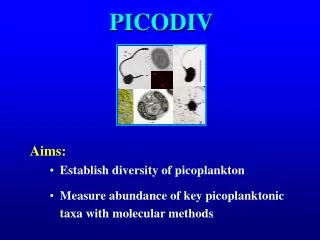
Picophytoplancton - Synechococcus - Picoeukaryotes : few data come from observations with TEM Micromonas pusilla Chrysochromulina sp. Petasaria sp. Prymnesiophyceae Pedinophyceae? Prasinophyceae Chrysophyceae Bacillariophyceae
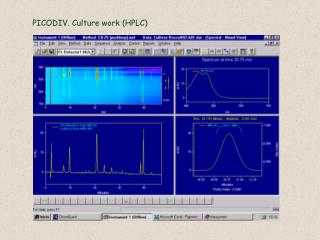
PICODIV : - Samples taken around midday, bi-mensually (lowest tide coefficient): < 200 µm - T°, N, P, Si, Chl a, Lugol fixed sample, Formalin fixed net sample - Samples for HPLC (1 L, <3µm, >3µm) - GF/F, Nuclepore - Samples for FISH (200mL) - Anodisc - 4 times per year : DNA samples + isolation of cultures