Kingdom Protista
1.43k likes | 1.54k Views
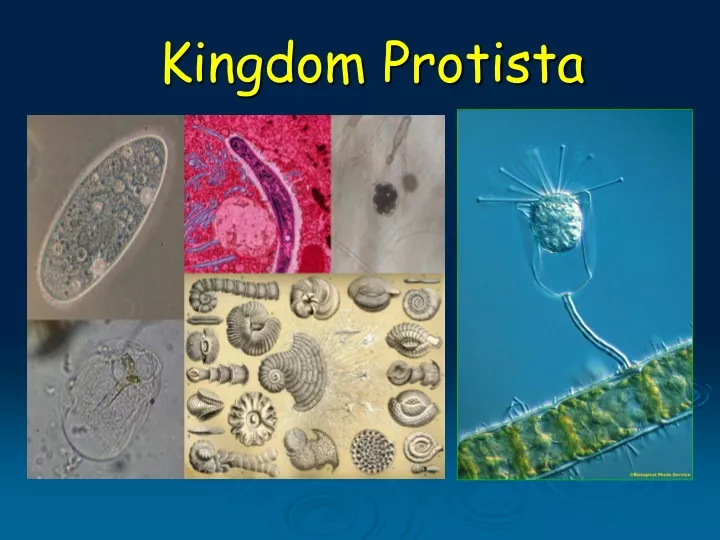
Protists constitute a diverse group of eukaryotic organisms, primarily microscopic and classified into three main categories: animal-like (protozoa), plant-like (algae), and fungal-like (slime and water molds). These organisms are crucial as they play significant roles in ecosystems, serving as both producers and consumers. Many protists are unicellular and reside in aquatic or moist environments. They can reproduce asexually or sexually and exhibit various locomotion methods. Protists are vital to nutrient cycling and some can cause diseases like malaria or dysentery.


Kingdom Protista
E N D
Presentation Transcript
KEY CONCEPTS • Protists are a diverse group of eukaryotic organisms, most of which are microscopic
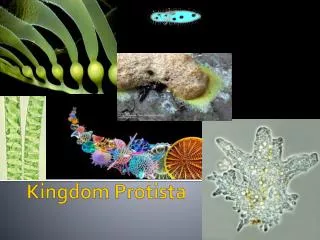
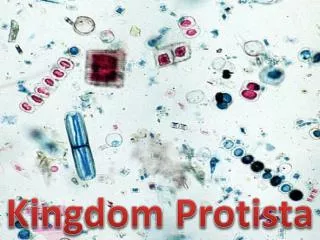
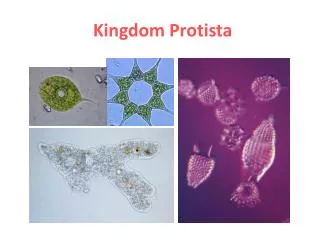
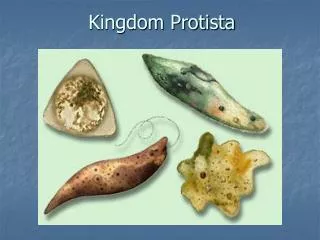
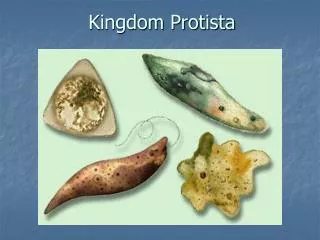
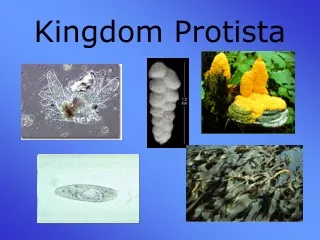
Protista • Not a really valid “Kingdom” • Few real evolutionary relationships • Contains • Algae: “plant-like” protists • Protozoa: “animal-like” protists • Slime & Water molds: fungal-like protists
What Are Protists? • “Dumping ground” kingdom • Eukaryotic • Heterotrophic and/or autotrophic • Single or multicellular • Ancestors to animals, plants, fungi
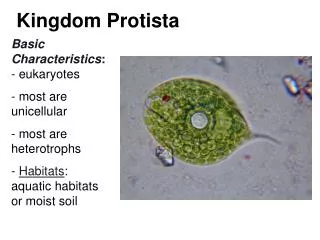
Animal-like Protists • Called Protozoans • Unicellular • Require water (live in water or moist soil) • Most heterotrophic • Some photosynthetic • Most are free-living • Some parasitic
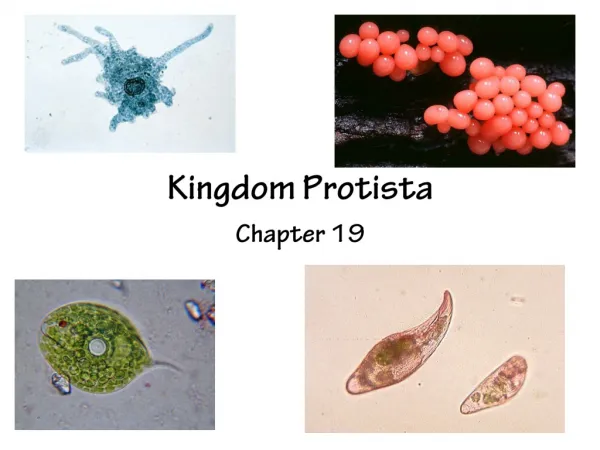
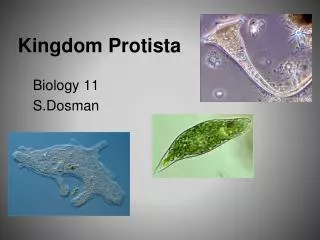
All Life Functions in Just One Cell • Have food and waste VACUOLES for storing and digesting food & wastes • Many are capable of MOVEMENT • RESPOND to environment – some have light sensitive eyespot Amoeba Paramecium
All Life Functions in Just One Cell • Maintain HOMEOSTASIS • Contractile Vacuoles pump out excess water • Form Protective Cysts when food or water is scarce (dormant stage with hard covering) Contractile Vacuole Pumping
Plant-like Protists • Photosynthetic • No true roots, stems, leaves Golden Algae Red Algae
Plant-like Protists • Photosynthetic • No true roots, stems, leaves Golden Algae Green Algae Red Algae Brown Algae
Fungi-like Protists • Heterotrophic • Decomposers • No cell walls Slime Molds Water Molds
Reproduction • Reproduction • Asexual: fission • Sexual: produce gametes (specialized sex cells) • Advantage: new combinations of genes from both parents (Red Queen Hypothesis)
Reproduction • All reproduce ASEXUALLY • Binary Fission - divides into 2 identical individuals (clones) • Rapid reproductive rate
Some Reproduce SEXUALLY Conjugation - Opposite mating strains pair and exchange genetic material (DNA)
General Characteristics • Eukaryotic • Unicellular • Some may live in colonies • May be Autotrophic or Heterotrophic or Both • Some are motile • Appeared about 1.5 BYA
Classified into Three Main Groups • Animal-like… heterotrophs capable of locomotion • Plant-like… photosynthetic autotrophs • Fungus-like… decomposers that reproduce by spores • Some protists may exhibit both animal-like & plant-like characteristics
Sizes of Protists • Unicellular organisms • microscopic • Colonies • loosely connected groups of cells • Coenocytes • multinucleate masses of cytoplasm • Multicellular organisms • composed of many cells • can get very large – some brown algae (the giant kelps) can be 100 feet in length
Locomotion • Protozoa used to be classified according to how they move. • Ciliates use fine “hairs” called cilia • Flagellates use longer, whip-like hairs called flagella • Amoebas and their relatives use pseudopodia • Pseudopodia are also used to capture food • Sporozoans (apicomplexans) don’t have any ability to move (non-motile)
Importance • Importance of Protists • Heterotrophic protists = protozoa • Consume bacteria and other protists • Components of aquatic and soil food webs • help with recycling nutrients • Some cause disease • Malaria • Dysentery • Sleeping sickness • others
Interactions • Protists are free-living or symbiotic • Symbiotic relationships range from mutualism to parasitism
Classification of Selected Medically Important Protozoa • Four groups • Mastigophora - flagellates • Sarcodina - amoebae • Ciliophora - ciliates • Apicomplexa – aka Sporozoans • Based on: • Method of motility • Mode of reproduction • Stages in the lifecycle
Amoeba surround and engulf their food… the process is called phagocytosis.
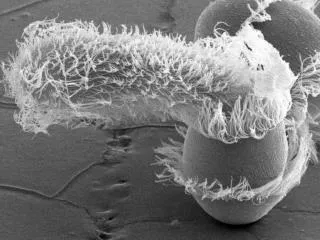
Ciliophora • all use cilia for movement • have many specialized structures, including mouths, anal pores, contractile vacuoles, and two nuclei (a large macronucleus and small micronuclei) • Ex. – Paramecium and Stentor
Phylum Zoomastigophora • have flagella • some species of zooflagellates have mutualistic relationships • ex.- Trichonympha digests cellulose in the guts of termites
Others are parasites, like Trypanosoma, which causesAfrican Sleeping Sickness (coma).
Trypanosoma Red Blood Cells Trypanosoma White Blood Cell Tsetse Fly: carries Trypanosoma to humans; in other words, it’s a Vector
Phylum Sporozoa • are parasites • have no means of locomotion • form spores that are dispersed by one or more hosts • ex. Plasmodium, which causes malaria
Portions of the Life Cycle of Plasmodium vivax Plasmodium vivax It’s Vector: Anopheles Mosquito Red Blood Cells
Pathogenic Flagellates: Trypanosomes • Giardia lamblia • Trichomonas vaginalis • Genus Trypanosoma • T. brucei causes sleeping sickness • T. cruzi causes Chagas disease
Giardiasis • Fecal-oral route of infection • recreational water, water, fomites, contaminated uncooked food • Symptoms normally begin 1 to 2 weeks (average 7 days) after becoming infected. • Symptoms • Diarrhea • Gas or flatulence • Greasy stools that tend to float • Stomach or abdominal cramps • Upset stomach or nausea • May lead to weight loss and dehydration • Symptoms of giardiasis may last 2 to 6 weeks.
Trichomonas vaginalis A flagellate - causes Trichomoniasis, a sexually transmitted disease
Trichomoniasis • STD • Clinical Features: • Trichomonas vaginalis infection in women is frequently symptomatic. • Vaginitis with a purulent discharge is the prominent symptom, and can be accompanied by vulvar and cervical lesions, abdominal pain, dysuria and dyspareunia. • The incubation period is 5 to 28 days. • In men, the infection is frequently asymptomatic; occasionally, urethritis, epididymitis, and prostatitis can occur.