Download
1 / 10
100 likes | 223 Views
The Qin Dynasty, led by the first emperor Shi Huangdi, transformed Ancient China with a powerful, centralized government and strict policies. Established in 221 BC, Shi Huangdi enforced Legalism, standardizing laws, currency, and weights across the newly unified nation. Notable achievements include significant construction projects, the creation of efficient irrigation systems, and the Great Wall, built to protect against invasions. However, Shi Huangdi's oppressive rule incited resentment among scholars and commoners, leading to civil unrest and the eventual collapse of the dynasty following his death.

E N D
Chapter 6 Lesson 3- Qin Dynasty Ancient China
The Qin Dynasty • The Big Idea • The Qin dynasty unified China with a strong government and a system of standardization. • Main Ideas • The first Qin emperor created a strong but strict government. • A unified China was created through Qin policies and achievements.
Shi Huangdi • The Legalist Qin king Yin Zheng took the throne in 221 BC and gave himself the title Shi Huangdi, which means “first emperor.” • He burned all books and writings that dealt with any practice other than Legalism. • He created a strict government with harsh punishments. • He used his armies to expand the empire and ensured that there would be no more revolts in the new territory. • He claimed all power and took land away from the lords. Commoners were forced to work on government building projects. • China was divided into districts with their own governors.
Unified China • Politics • Shi Huangdi took complete control of the land and the people. • There was a strict chain of command. • Taxes and building projects were introduced. • Culture • Shi Huangdi set up a uniform system of law. • Rules and punishment, writing styles, and money were consistent across China. • Finance • Gold and copper coins were standardized. • Uniform weights and measures help standardize trade and other legal issues.
Qin Achievements Building Projects • Massive government building projects gave jobs to many poor workers. • New roads were built and maintained to provide easy access to and from these buildings. Water Systems • Canals were built to connect rivers and keep trade fast and efficient. • Irrigation systems that are still in use today watered the fields and made more land good for farming.
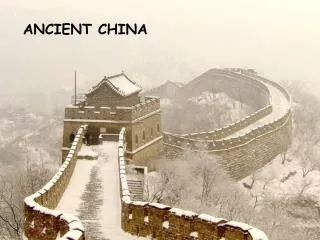
The Great Wall Of China • The Great Wall was built to protect the country from invasion • The Great Wall linked previously built walls across China’s northern frontier. • The building of the wall required years of labor from hundreds of thousands of laborers.
The Fall of the Qin: The Oppressed Rise Up • Many scholars, peasants, and nobles grew resentful of Shi Huangdi’s harsh policies and complete control. • Upon the death of Shi Huangdi, the country began to unravel. • Rebel groups fought among themselves, and eventually the Qin capital was burned to the ground. • With no authority present, the country fell into civil war.