Understanding DNA Mutations: Types, Causes, and Effects
This guide explores the various types of mutations that can occur in DNA, affecting genetic information. It distinguishes between germ cell mutations, which are inherited by offspring, and somatic cell mutations, which occur in body cells. The document categorizes chromosome mutations such as deletions, inversions, translocations, and nondisjunction, alongside gene mutations including point mutations, substitutions, frameshifts, and insertions. Understanding these mutations is vital for comprehending their roles in genetics, evolution, and disease.

Understanding DNA Mutations: Types, Causes, and Effects
E N D
Presentation Transcript
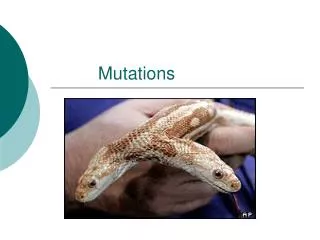
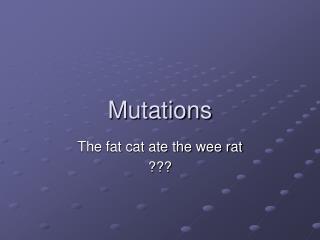
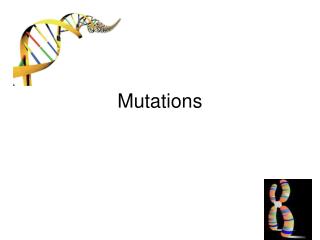
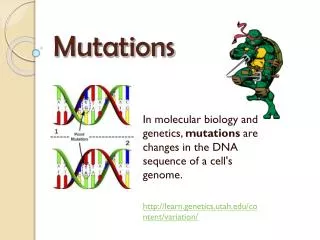
Mutations • Change in a DNA sequence that affects genetic information. Oohhh…Snap.
Mutations • A change in the nucleotide-base sequence. • Involve an entire chromosome or a single nucleotide. Germ cell: Occurs in the organism’s gametes. Passed onto offspring. Somatic-cell: Take place in organism’s own body cell Lethal: Cause death.
Chromosome Mutations • Deletion • Loss of a piece of chromosome
Chromosome Mutation • Inversion • Segment breaks off, flips, and reattaches
Chromosome Mutation • Translocation • Piece breaks off and reattaches to different chromosome
Chromosome Mutations • Nondisjunction • Chromosome fails to separate from its homologous partner during meiosis
Gene Mutations • Point mutations • Change that occurs within a single gene or other DNA segment
Gene Mutations • Substitution • One nucleotide replaces another
Gene Mutations • Frameshift mutation • Loss of nucleotides cause incorrect grouping of codons
Gene Mutations • Insertion mutation • One or more nucleotides are added to a gene, which can also result in a frameshift mutation