Understanding the Five Basic Types of Species Interactions: Competition, Predation, and More
130 likes | 402 Views
Explore the five fundamental types of species interactions that shape ecosystems: Interspecific competition, predation, parasitism, mutualism, and commensalism. Learn how competition occurs both within and between species for vital resources like food and shelter. Discover the predator-prey dynamic, where one species hunts another, and how organisms adapt for survival. Dive into symbiotic relationships where species either benefit both, harm one, or create neutral interactions. Uncover the intricate web of life that defines these relationships in nature.


Understanding the Five Basic Types of Species Interactions: Competition, Predation, and More
E N D
Presentation Transcript
Species Interactions Miller 8-3
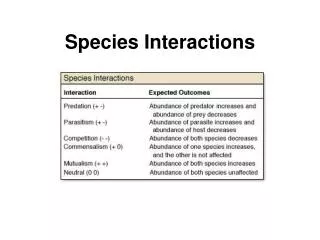
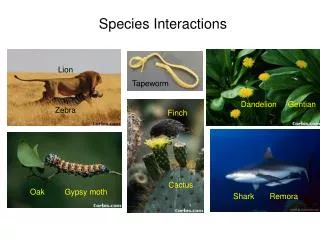
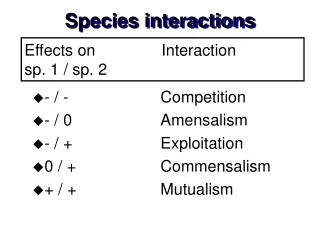
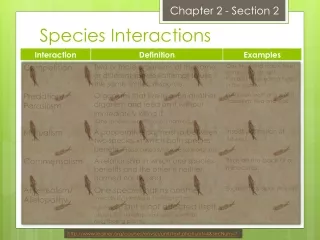
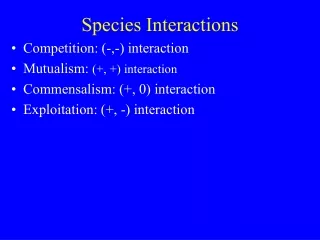
Five basic types of interactions • Interspecific competition • Predation • Parasitism • Mutualism • Commensalism
Competition • Between members of the same species for resources such as food, water and shelter. • Often solved by establishing territories Grey Wolf – large territory House Wren – small territory
Interspecific competition House Wren • Competition between different species for one or more resources • Often these species are very much alike – they occupy similar niches • Competitive Exclusion Principle – niches can not overlap completely or for very long Bewick’s Wren
Predator – Prey Interactions • Members of one species (predator) feed directly on members of another species (prey) • Often beneficial to the prey species.
How do predators increase their chances of getting prey? • Pursuit – adaptations that allow the running down of prey. Fast, good eyesight, hunting cooperatively • Ambush – hide and ambush. Camouflage
How do prey defend themselves? • Move fast • See or smell well • Protective shells • Thick bark • Spines • Camouflage • Chemical warfare Coral snake (poisonous) and milk snake
Snake caterpillar Canyon tree frog
Clown Fish is not bothered by stinging cells of Anemone. It gets it’s food as leftovers from the Anemone. The clown fish protects the anemone from predators
Symbiosis • Long term relationship of two species living together • Three types • Parasitism • Mutualism • Commensalism
Mutualism • Both species benefit from the interaction Lichen – Fungus provides attachment to the rock or tree and algae does photosynthesis to make food for both
Commensalism • Benefits one species, but does not benefit or harm the other species Orchids are epiphytes
Parasitism • When one species (parasite) feeds on part of another species (host) • One benefits and one is harmed