The Appendix: From Vestigial Organ to Functional Microbiome Haven
The appendix, often regarded as a vestigial organ devoid of function, may have played a significant role in our ancestors' diets by aiding in the digestion of raw meat and cellulose due to its storage of beneficial bacteria. Today, it serves as a reserve for these bacteria during illnesses, helping to restore gut health. Additionally, the exploration of lactose intolerance unveils our unique status among mammals in consuming other animals' milk post-weaning. The evolution of lactose tolerance suggests that genetic mutations allowed certain individuals to thrive on dairy as agriculture emerged, showcasing our adaptability.

The Appendix: From Vestigial Organ to Functional Microbiome Haven
E N D
Presentation Transcript
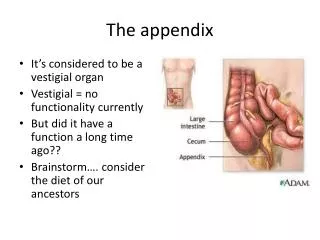
The appendix • It’s considered to be a vestigial organ • Vestigial = no functionality currently • But did it have a function a long time ago?? • Brainstorm…. consider the diet of our ancestors
BEFORE….. • The appendix helped digest the raw meat and cellulose diet of our ancestors using the bacteria it stored. NOW….. • appendix serves as a haven for useful bacteria when illness flushes those bacteria from the rest of the intestines.
What about lactose intolerance? • The inability to digest dairy products because of lack of certain enzymes • Were we meant to have lactose tolerance? • Consider the fact that we are the only mammals who drink other animal’s milk after weaning • Brainstorm how lactose tolerance may have come about?
As agriculture started being practiced it became advantageous to be able to digest dairy products • Those with a mutation in the lactase enzyme were able to do it! This enzyme in others became inactive after childhood