Addressing the Biodiversity Crisis: Conservation Strategies and Threats to Species Survival
The biodiversity crisis presents a pressing concern as we witness unprecedented extinction rates. Habitat destruction remains the most significant threat, responsible for 73% of species designated as extinct or endangered. Exotic species competition and overexploitation further exacerbate this issue. Conservation biology emphasizes the importance of preserving genetic variability, maintaining ecosystems, and protecting species for human welfare—25% of medical prescriptions rely on biodiversity. We must confront these challenges through effective resource conservation and recognition of biodiversity hotspots and endemic species.

Addressing the Biodiversity Crisis: Conservation Strategies and Threats to Species Survival
E N D
Presentation Transcript
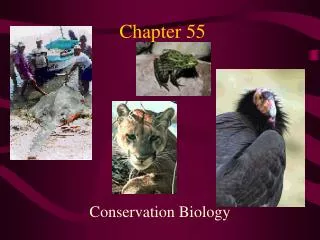
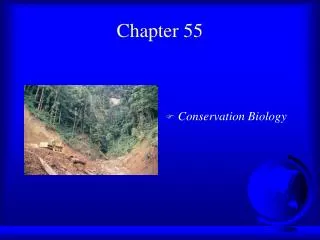
Chapter 55 • Conservation Biology
Biodiversity crisis • Extinction~ natural phenomenon, however, rate is of concern….. • 50% loss of species when 90% of habitat is lost • Major Threats: • Habitat destruction~ single greatest threat; cause of 73% of species designation as extinct, endangered, vulnerable, rare; 93% of coral reefs • Competition by exotic (non-native) species ~ cause of 68% of species designation as extinct, endangered, vulnerable, rare; travel • Overexploitation~ commercial harvest or sport fishing; illegal trade
Biodiversity: Human welfare • 25% of all medical prescriptions • Genetic variability • Aesthetic and ethical reasons • Species survival
Conservation biology focus • Preservationism: setting side select areas as natural and underdeveloped • Resource conservation: public lands to meet the needs of agriculture and extractive industries, i.e., ”multiple use” • Evolutionary / ecological view: natural systems result from millions of years of evolution and ecosystem processes are necessary to maintain the biosphere
Geographic distribution of biodiversity • Energy availability~ solar radiation • Habitat heterogeneity ~ environmental patchiness • Niche specialization~ narrow resource range specialization • Population interactions~ complex population interactions
Population & species level conservation • Biodiversity hot spot: small area with an exceptional concentration of species • Endemic species: species found nowhere else • Endangered species: organism “in danger of extinction” • Threatened species: likely to become endangered in the foreseeable future • Bioremediation: use of living organisms to detoxify polluted systems