Download
1 / 6
60 likes | 183 Views
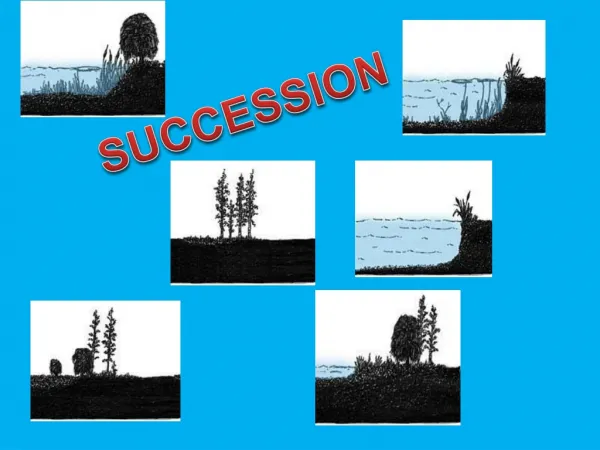
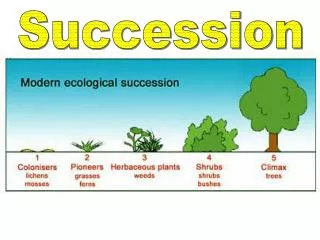
Ecological succession is the gradual regrowth of species in an area after it has been disturbed. It involves two main types: primary succession, which occurs in lifeless areas like rocks, sand dunes, or glaciers, and secondary succession, which follows disruptions in existing communities, such as forest fires or human activities like logging. Pioneering species, such as lichen or crabgrass, play a crucial role in these processes, initiating growth and preparing the environment for more complex species to thrive.

E N D
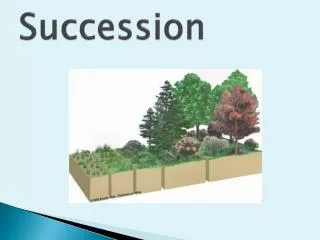
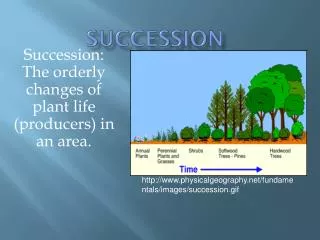
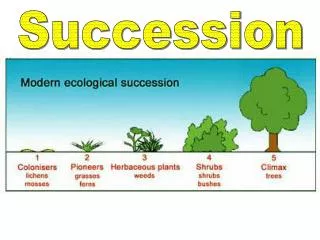
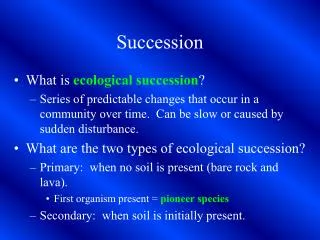
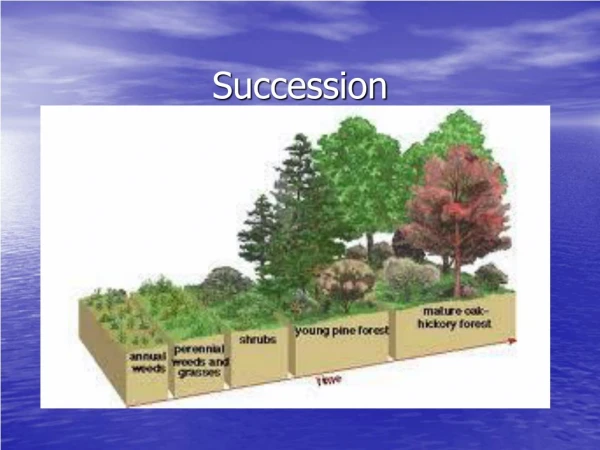
Succession • Gradual, sequential regrowth of species in an area • Usually after it has been destroyed • Pioneering Species • Small, fast-growing, fast-reproducing • Usually first species to grow in successions • Ex. Crabgrass & ragweed
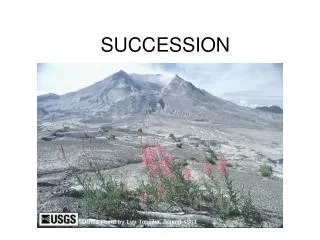
Primary Succession • The development of a community in an area that has not supported life previously • Rock • Sand dune • island
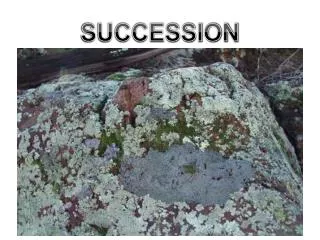
Canadian Shield • Where a glacier was • Eventually rock broke • Pioneering species was LICHEN • Association of algae & fungi
Secondary Succession • Sequential replacement of species following a disruption of an existing community • Forest fire • Storm • Human activity (logging, mining, farming)