Enhancing Trust Through Transparency: Utah's Commitment to Government Accountability
In Utah, 75% of residents trust their state government, a figure significantly higher than the national average of 62%. Transparency is key, linked to accountability and citizen empowerment. The state's commitment to transparency began with the 2008 Transparency Advisory Board, leading to the creation of Transparent Utah Gov in 2012, a financial and public records repository. This shift not only increases efficiency but also saves taxpayers significant money. By 2016, Utah aims to reform its annual leave funding framework to ensure fiscal responsibility and build trust in government.

Enhancing Trust Through Transparency: Utah's Commitment to Government Accountability
E N D
Presentation Transcript
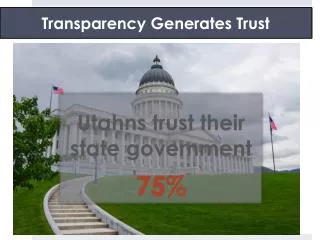
Transparency Generates Trust Utahns trust their state government 75%
TRANSPARENCY = ACCOUNTABILITY NATIONWIDE • 62%Trust state government • 19%Trust federal government • 25% Believe Obama has lived up to promised transparency • 73% Believe current administration to be less transparent than others
UTAH IS LEADING 2008 Transparency Advisory Board created 2009 Transparent.Utah.Gov 2012 Expanded board oversight to include all public data 2014 Open.Utah.Gov – Statewide data portal • Financial data • Public records repository • GRAMA portal
TRANSPARENCY SAVES MONEY $13 savings per online transaction
THE WAY OF THE FUTURE • USOE & State Tax Commission save $15,000/year on time saved from reduced GRAMA requests • Information requests fulfilled by transparency website rather than by a state employee saves $750-$1,000 • Increases efficiency • Empowers citizens
SB269 Annual Leave Program II for State Employees
ANNUAL LEAVE OVERVIEW • Current Environment: • $110M of unfunded leave (3.1M hours) • Leave is funded when used, not when earned • Sequestration Furlough Issue: • An employee should expect that the money to pay their leave is set aside and available for them when they need it • Who should pay: • An employee accrues leave in one agency, then transfers to another before taking it • New agency ends up paying the bill for leave earned somewhere else
ANNUAL LEAVE OBJECTIVE Creates New Fiscal Responsibility Framework: • By 2016, newly accrued leave will be funded when earned • Funding placed in a trust fund for employees • Also, begin to fund the existing unfunded liability • Various approaches • Example: Smoothed LIFO • By 2018, 60% of the liability will be funded • By 2040, 95% of the liability will be funded • No change from the employee perspective