Download
1 / 17
180 likes | 308 Views
This overview examines the fundamental differences between weather and climate, emphasizing the various climate controls such as solar energy, latitude, and geographic features. The Idealized Global Circulation Model is introduced, illustrating how atmospheric and oceanic circulation is influenced by latitudinal heating imbalances, the Coriolis Effect, and global pressure systems. Seasonal variations and their impact on climate regions are explored, alongside visual aids like climographs and climate regions. The upcoming class will focus on Chapter 2 (pp. 56-61) and stimulate discussion on the major influences on climate.

E N D
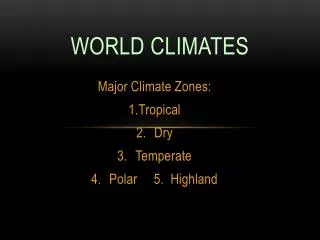
Global Circulation and World Climates • Weather vs. Climate • Climate Controls • Idealized Global Circulation Model • Seasonal Variations • Global Climates For Next Class: Read Chapter 2 (pp. 56-61)
Questions What is the difference between weather and climate? What are the major influences (or controls) on climate?
Climate Controls • Solar Energy • Latitude • Land and water contrasts • Maritime effect (proximity to major water bodies) • Continentality • Global wind and pressure systems • Idealized Global Circulation Model • Elevation*
General circulation of the atmosphere and ocean is driven by latitudinal heating imbalances (i.e. surplus in tropics and deficit in polar regions)
Idealized Global Circulation Model • ITCZ – Inter-Tropical Convergence Zone • STHP – Sub-Tropical High Pressure • Coriolis Effect – Caused by rotation of the Earth • Rightward deflection in Northern Hemisphere • Leftward deflection in Southern Hemisphere • SPLP – Sub-Polar Low Pressure • PHP – Polar High Pressure
Idealized Global Circulation Model • Land and water contrasts • Maritime effect (proximity to major water bodies) • Continentality • Elevation • Latitude (solar energy) • Global wind and pressure systems (Idealized Global Circulation Model)
Global Pressure Systems and Wind Patterns Figure 2.12
General Circulation Figure 5-14
Rossby Waves and Sub-Polar Low Pressure • Exact latitudinal position of the SPLP is highly variable and depends on the upper-level Polar Front Jet Stream.
Blizzard of 1993 • Developed in association with an extremely amplified Rossby Wave. Note the strong cold front in Honduras!
Seasonal Variations in Latitude Figure 5-36
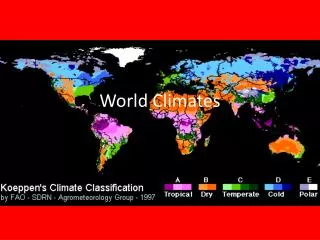
Modified Köppen System Figure 8-4
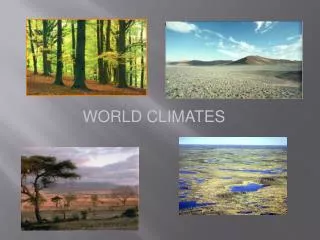
Global Climate Regions Figure 2.13 Climograph
Climographs Figure 8-6