Protein Synthesis
This overview explores how genes coded within chromosomes influence specific traits like eye and hair color through the process of protein synthesis. We discuss the roles of DNA and RNA, highlighting the steps of transcription and translation. Discover the significance of messenger RNA (mRNA), transfer RNA (tRNA), and ribosomal RNA (rRNA) in carrying genetic information from the nucleus to ribosomes, where proteins are formed. Learn how codons and anti-codons work together to synthesize proteins that shape our characteristics.

Protein Synthesis
E N D
Presentation Transcript
I. How do chromosomes lead to specific traits? A. Chromosomes are made of DNA • Parts of DNA code for a protein • A protein relates to a trait or a gene (examples: eye color, hair color, enzymes, hormones…)
How do we get proteins from genes (coding DNA)? Let’s find out: http://www.wisc-online.com/objects/index_tj.asp?objID=AP1302
Function of RNA • 1) DNA cannot leave the nucleus (it’s stuck) • 2) RNA carries a copy of code to the ribosomes
Review Structure of RNA • 1) RNA - Ribonucleic Acid a) the sugar in RNA is ribose b) in RNA the base thymine is replaced with URACIL.
Types of RNA a) r RNA - Ribosomal RNA - makes up ribosomes b) mRNA- messenger RNA -carries the genetic code out of the nucleus to the ribosomes
Types of RNA Cont c) tRNA- Transfer RNA - transfers amino acids to the ribosome in order to make proteins
mRNA Structure • A group of 3 mRNA nucleotides is called a codon.
tRNA Structure • A group of 3 tRNA nucleotides is called an anti-codon (opposite of the codon) ex. mRNA codon = UAG tRNA anti-codon = AUC
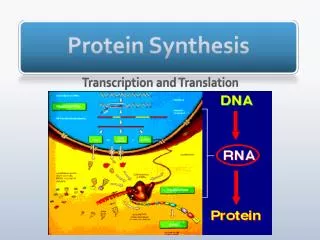
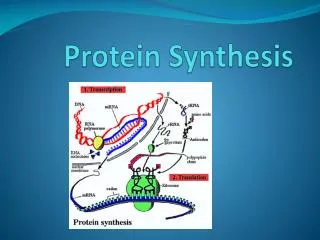
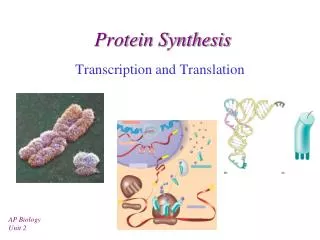
Protein Synthesis • 1) Transcription (in the nucleus) • 2) Translation (in the cytoplasm)
Transcription • Transcription - mRNA is copied from DNA • Steps: 1) DNA unzips 2) RNA nucleotides bond to the exposed bases on the DNA strand 3) Transcription continues until a stop” codon is reached
Translation • Translation- mRNA is used to make protein • Steps: 1) mRNA leaves the DNA in the nucleus and travels to a ribosome 2) the ribosome begin “translating” the mRNA into protein when it reaches a “start” codon
Translation 3) tRNA brings amino acids 4) Translation continues until a “stop” codon is reached.
tRNA Structure • Anti-codon on one end • Amino acid on other
Translation 1) tRNA molecules match their anti-codon to the mRNA codon 2) A protein is formed
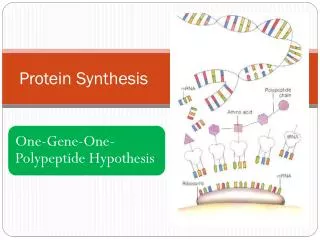
tRNA Protein (amino acid chain) Ribosome mRNA
Amino Acids • 20 possible amino acids • Each tRNA anti codon has a specific one
Amino Acids Third Letter
TRANSCRIPTION (in the nucleus) 1. DNA helix opens 2. mRNA chain is copied from DNA TRANSLATION (in the cytoplasm) 1. mRNA attaches to a ribosome in the cytoplasm 2. tRNA molecules carrying amino acids match anti-codon to mRNA codon 3. Amino acids are released and bonded together to make a protein. Review