Media Influence on Civil Liberties in Post-9/11 America: A Comprehensive Analysis
This study by Linda M. Merola examines the shift in media coverage regarding terrorism and civil liberties since September 11, 2001. It explores how exposure to threatening information in both print and broadcast media has altered public perception and decision-making about civil liberties. Through content analysis, the research reveals significant peaks in threatening media content following 9/11, especially in 2003, before tapering back to pre-9/11 levels by 2006. Notably, the study distinguishes the varying impacts on print versus broadcast media.

Media Influence on Civil Liberties in Post-9/11 America: A Comprehensive Analysis
E N D
Presentation Transcript
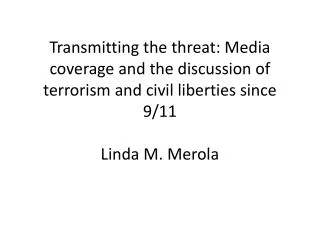
Transmitting the threat: Media coverage and the discussion of terrorism and civil liberties since 9/11 Linda M. Merola
Since 11 September 2001, a significant portion of the public debate in the United States has focused upon the threat of terrorism. Previous scholarship has concluded that exposure to threatening information may result in significant alterations to individual decision‐making and, ultimately, may influence support for expansive civil liberties. Since information may critically impact support for civil liberties, the current study investigates alterations in print and broadcast media content related to civil liberties before and after 11 September 2001. The content analyses utilized here focus upon the types of content (such as threatening information, group‐specific information, and contextual information) that experimental research has suggested may influence individual decision‐making concerning civil liberties. Results suggest that threatening information in the media coverage of civil liberties escalated following 9/11 until it peaked in the year 2003. Following 2003, levels of threatening information gradually decreased, returning to pre‐9/11 levels in 2006. In comparison to broadcast media, the print media seems to have experienced fewer changes following 9/11.