Download
1 / 7
70 likes | 208 Views
This guide outlines the differences between physical and chemical properties and changes in substances. Physical properties can be observed or measured without altering the substance, such as melting point, boiling point, color, and density. Conversely, chemical properties describe a substance's potential to undergo changes that result in new substances, like rusting or reacting with acids. The document also provides examples of physical and chemical changes, including visual signs to identify chemical reactions, such as gas production, heat, light, and color changes.

E N D
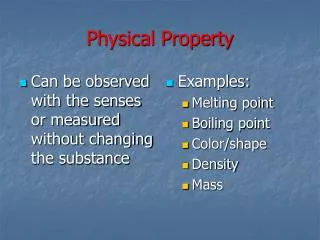
Can be observed with the senses or measured without changing the substance Examples: Melting point Boiling point Color/shape Density Mass Physical Property
A change that does not involve altering the identity of the substance Examples: Freezing Melting Boiling Cutting Grinding Physical Change
Relates to a substance’s ability to undergo a change into a different substance Examples: Ability to rust Flammable Ability to react with an acid Decomposes in light Chemical Property
A change where one or more substances is converted into different substances (a chemical reaction) Examples: Rotting Burning Fermenting Cooking Chemical Change
So how do I recognize a chemical change?? • Bubbling – production of a gas • Heat • Light • Precipitate – a solid formed during a reaction • Unexpected color change
Chemical change = chemical reaction and is written as Reactants Products This is what you make This is what you start with