Download
1 / 19
190 likes | 336 Views
Infectious diseases are illnesses caused by pathogens that invade the body. These diseases can spread through person-to-person contact, contaminated food and water, animal bites, or environmental exposure. Pathogens include bacteria, viruses, fungi, protozoa, and parasites. Bacterial diseases (e.g., tuberculosis, strep throat) can often be treated with antibiotics, while viral diseases (e.g., flu, AIDS) typically focus on symptom management. The body’s defense against these diseases includes physical barriers like skin, an inflammatory response, and the immune system.

E N D
What is an Infectious Disease? • Any disease that is caused by an agent that has invaded the body. • These are caused by: • Person to person contact • Food and water • Animals • Something in the environment
Person to Person Contact • Sneezing • Coughing • Sharing Drinks
Food and Water • Contaminated food • Example: Salmonella • Contaminated water • Drinking from streams and lakes
Animals • From animal bites we can get rabies, malaria, lymes disease, West Nile etc.
Environment • Pathogens that are present on most of the objects around you. • Door handles • Phones
All infectious diseases are caused by a pathogen. • A pathogen is any agent that causes disease. • Examples: • Bacteria • Viruses • Fungi • Protozoan • Parasites
Bacteria • A tiny single cell organism that lives everywhere on earth. • Examples: • tuberculosis, tetanus, sinus infection • Treatments: • Antibiotics (which prevent growth and division of bacteria.
Viruses • A disease causing particle made of genetic material and a protein coat. • Examples: Chicken pox, flu, measles, colds, AIDS • Treatment: Medication to treat the symptoms and prevent further production in human cells.
Bacteria versus Viruses • Bacterial infections: Can be treated with antibiotic • Examples: strep throat, sinus infections • Viruses: Can only treat the symptoms. Some viruses just have to run their course. • Examples: flu, cold, mumps, measles, hepatitis
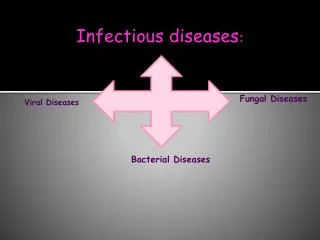
Bacterial Diseases • Strep throat • Tuberculosis • Sinus infection • Malaria • Tetanus
Viral Diseases • Common cold • Influenza (flu) • Cold sores • Warts • Mononucleosis • Chicken pox • AIDS
Fungus • Organisms that absorb and use nutrients of living or dead organisms. • Examples: athletes foot, ringworm, yeast infections • Treatment: over the counter meds or prescription
Protozoans • Single celled, microscopic organisms. • Leading cause of death in some parts of the world. • Example: malaria • Prevention: good hygiene and health
Parasite • Get energy and nutrients from feeding on other things. • Examples: Head lice, tape worm, lymes disease
How does your body fight diseases? • Physical Barriers: skin, mucous membranes • Consider these to be like a defensive line
Inflammatory Response: reaction to injury or infection that is characterized by pain, redness, swelling. • This would be the linebackers
Immune system: Contain certain types of blood cell and antibodies. • Safety
If the pathogen makes it past your immune system and score a touchdown, you are now officially sick!