Characterization
Characterization is essential in literature, enabling readers to connect with characters on multiple levels. To understand a character, consider their appearance—what they look like and how they dress—as well as their expressed thoughts and conversation. Actions are crucial; observe what a character does and what they choose not to do. Good characters are believable, consistent, multidimensional, and grow throughout the story. Reflect on how you identify with the character and how their journey affects you. What makes them memorable? Analyzing characters enriches our reading experience.

Characterization
E N D
Presentation Transcript
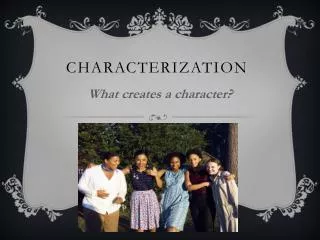
Characterization What creates a character?
Ways to know a character • Appearance • How is the character described? • How does the character dress? • What is the physical appearance of the character?
Ways to know a character • Thoughts and Conversation • What the character says, thinks, or feels • What others in the story say or think about the character
Ways to know a character • Actions • What the character does • What the character chooses NOT to do • What others in the story do to the main character
Good characters are: • Believable • Consistent • Multidimensional (not a simple stereotype) • Memorable • Grow or change over time
Ask yourself: • Is the character believable? Have you ever felt like the character feels? What makes them seem real? • Is the character’s behavior consistent with him or her? Does their change seem reasonable?
Ask yourself • Do you identify with the character? Why? • Does the character change or learn as the story progresses? • Is the character memorable? What will you remember about the character next month?