Understanding Low Pressure Systems, Humidity, and Evaporation in Weather
This guide explores the dynamics of low pressure systems in the Southeast, the role of moisture in the atmosphere, and essential concepts of evaporation. It covers how evaporation works, its influencing factors, and how humidity is measured. Through practical examples, such as comparing water levels in glasses and understanding the drying process of a towel, we delve into the connections between air temperature, dew point, and relative humidity. Gain insights into weather patterns and the science behind evaporation to better appreciate daily weather variations.

Understanding Low Pressure Systems, Humidity, and Evaporation in Weather
E N D
Presentation Transcript
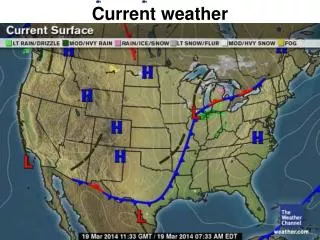
What type of weather is associated with the Low pressure system located in the South East?
Define Evaporationwhat speeds it up? Wind, heat, surface area
The glasses below are half-filled with water (50% full). Which glass contains more water?
If air at 10°C can hold 10 gallons of water, and 5gallons are present, what % of the air is full of water? _______ • If the air can hold 10 gallons, and 10 gallons are present, what % of the air is full of water? ____________
Air temp = 84 Dew Point temp = 61High or Low pressure? Will a wet towel dry quickly or slowly today?
Air temp 64 Dew Point temp 64Pressure system? Towel dry fast or slow
Ever notice how you feel cold when you get out of the shower or pool? That’s because evaporation is a heating process. Water needs heat in order to evaporate and therefore it gets the heat from your Body.
Because evaporation is pulling the heat out of the thermometer, the wet bulb is always colder than the dry bulb (or the same temp)
Think about this. If it is raining out, will there be a lot of evaporation taking place
Find the Dew Point for the following. Dry bulb temp =-8 Wet Bulb = -9Dry Bulb = 20 Wet Bulb = 16 Dry bulb = 2 R.H = 67. What is the Wet bulb Temp?Dry Bulb = 16, Dew Point = 11, what is the Relative Humidity?