Download
1 / 8
80 likes | 183 Views
Learn about the earliest Americans, from Ice Ages to the Maya and Anasazi civilizations. Discover the Olmecs, Mound Builders, and Anasazi in this fascinating journey through time.

E N D
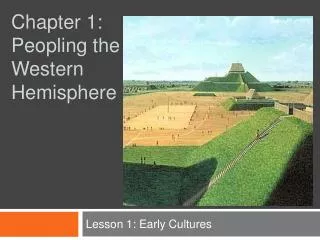
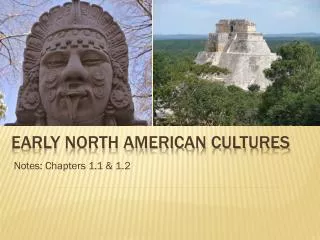
Early Cultures Chapter 1: Lesson 1
The First Americans • Thousands of years ago, Earth went through Ice Ages and much of the Earth’s surface was covered by glaciers • As the water froze, it lowered the water level in the ocean and uncovered land that was once underwater • Animals and hunters walked across ‘land bridges’ • One of these bridges connected Asia to North America, this was called Beringia • The first Americans followed animals over the land bridge and survived by hunting animals and gathering wild plants • Early settlers hunted mammoths, large elephant-like creatures
The Earliest Farmers • Glaciers began to melt around 10,000 B.C. • The land bridges were once again covered by water as the oceans rose • Hunter-gatherers could not return to Asia • Many kept moving, while others settled • People started to plant seeds as early as 7000 BC in South America and central Mexico • The climate was warm and rich in natural resources but had few large animals to hunt • For food, they grew corn, beans, squash, tomatoes, and sunflowers
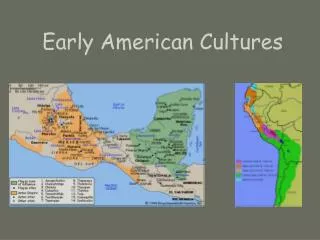
The Olmecs • The Olmec were one of the earliest civilizations in the Americas • From 1300-1400 BC, they lived along the Gulf Coast of southern Mexico • They were farmers and built a trading city called, La Venta • They were among the first Americans to use stone in sculpture and architecture • They are known most for creating a calendar and for playing ceremonial ball games
The Maya • Archeologists believe the Maya developed their civilization around 300 BC in Southern Mexico and Guatemala • They grew abundant supplies of food for their large population • Corn (maize) was their main food source • They were also artists, scientists, and historians • They formed large cities with stone temples, palaces, and buildings • They divided the calendar into 260 days and wrote down important days, times, and events • The Maya also invented the number zero • Mayan temples and religious centers were the largest at the time • Mayans were also great traders in their region (pg 43)
The End of Maya Civilization • The Maya civilization disappeared around 909 A.D • We do NOT know why they left their cities and built no more temples, palaces or monuments • Possible causes: food shortages, war • Descendants of the Maya live in the same area today, speak the Maya language and follow many of their customs and traditions
The Mound Builders • Lived in the southeast U.S. around 3000 BC • One of the first groups, the Adena people settled along the Ohio River (800 B.C. to 100 B.C.) • The Hopewell Mound Builders settled in the same place from 100 B.C. to A.D. 1000 • The Cahokia lived along the Mississippi River around A.D. 1000 • Archeologists believe they built mounds to bury their dead and the mounds were later used for religious ceremonies • Great Serpent Mound, the largest mound, was built near present day Cincinnati, Ohio was built around 100 BC by the Adena
The Anasazi • The Anasazi began to flourish around A.D. 200 in the Southwest United States • Lived in the present day Four Corners (Utah, Colorado, New Mexico, Arizona) • They developed villages beneath rock cliffs, on canyon sides, and on top of mesas • They used irrigation to bring water to their lands and farmed in the dry area