
Understanding SCSP: Phases, Protocols, and Applications
E N D
Presentation Transcript
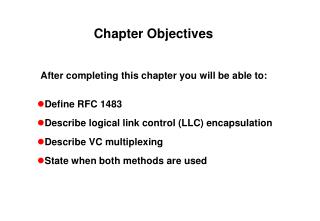
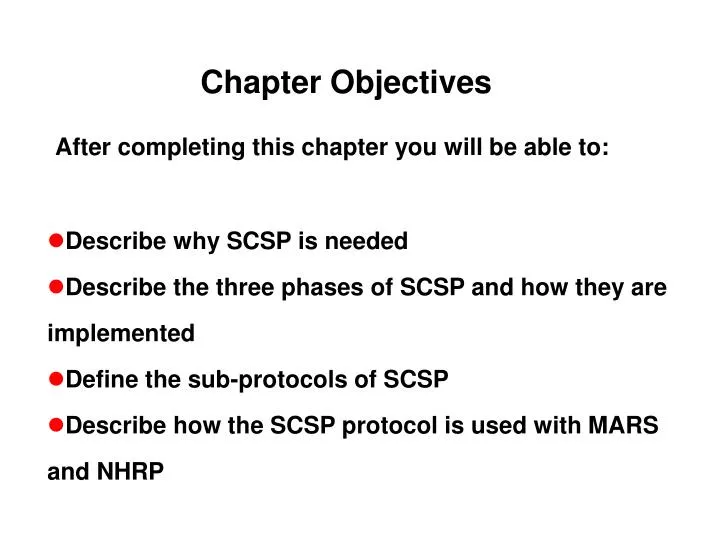
Chapter Objectives After completing this chapter you will be able to: • Describe why SCSP is needed • Describe the three phases of SCSP and how they are implemented • Define the sub-protocols of SCSP • Describe how the SCSP protocol is used with MARS and NHRP
RS DCS DCS SCSP Topology Model Server Group A Server Group B DCS DCS RS LS Local Server (LS) Directly Connected Server (DCS) Remote Server (RS) LS
DCS DCS Hello Hello • Sender ID • Receiver ID • Hello Interval • DeadFactor LS Hello Protocol
Down Waiting Bidirectional Connection Unidirectional Connection Hello Protocol States
CSAS Records DCS 2 CSAS Records DCS 1 DCS 1 DCS 2 Cache State Advertisement Summary Records (CSAS records) LS LS Cache Alignment Protocol
Down Master/Slave Negotiation Cache Summarise Aligned Update Cache Cache Alignment Protocol States
DCS • Add an entry • to your cache • Remove an entry • from your cache Cache entry has been modified Cache entry has timed out LS Cache State Update Protocol Changes of State in the Cache of the LS
Applications of SCSP • MARS • NHRP • ATMARP
MARS Servers Cache synchronised with Sub Cache A Cache synchronised with Sub Cache B Sub Cache A Sub Cache B
NHRP Servers • All NHRP servers in the same LIS are in the same server group • An NHRP client registers with only one NHRP server but may use any NHRP server within the server group