Download
1 / 8
0 likes | 3 Views
EMDR therapy is a powerful, evidence-based approach that helps individuals address the unresolved trauma often underlying addiction. By reprocessing distressing memories and reducing emotional triggers, EMDR empowers people to break the cycle of substance use and build lasting recovery. This trauma-informed method is especially effective for those with co-occurring mental health issues, offering a deeper path to healing beyond traditional talk therapy.<br><br>Visit:- https://wishoperecovery.com/emdr/

E N D
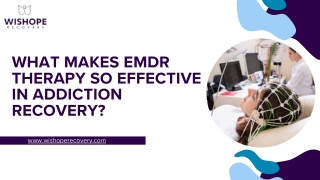
WHAT MAKES EMDR THERAPY SO EFFECTIVE IN ADDICTION RECOVERY? www.wishoperecovery.com
INTRODUCTION Addiction is not just a behavioral issue—it’s often a symptom of unresolved trauma, emotional pain, or adverse life experiences. Traditional recovery programs address the symptoms of substance use, but they may not fully resolve the emotional roots that drive it. EMDR (Eye Movement Desensitization and Reprocessing) is a trauma-focused psychotherapy that helps individuals process distressing memories, reduce emotional triggers, and build healthier thought patterns. Its growing use in addiction treatment is changing how recovery is approached—with longer-lasting, trauma-informed results.
1. EMDR HEALS THE ROOT CAUSE OF ADDICTION Many people use substances to numb pain or cope with unresolved trauma.EMDR therapy helps clients safely access and reprocess traumatic memories that fuel these behaviors. Through guided eye movement therapy or other forms of bilateral stimulation, EMDR activates the brain’s natural healing process, allowing individuals to view traumatic memories with less fear, guilt, or shame. This process reduces the emotional weight of the memory—making it far less likely to drive substance use. Instead of avoiding pain through drugs or alcohol, clients learn to confront and reframe it in a safe, controlled environment. “Addiction isn’t about the substance—it’s about the pain. EMDR helps heal the pain.” 2. IT INTERRUPTS THE TRIGGER–CRAVING–RELAPSE CYCLE One of the biggest challenges in addiction recovery is managing emotional triggers. For many, these triggers stem from unprocessed trauma.EMDR therapy for addiction helps to weaken or eliminate the emotional charge of these triggers, reducing the body’s fight-or- flight response and the impulse to use substances. By disconnecting traumatic memories from present-day emotional responses, EMDR allows individuals to face stressors without the automatic craving for escape. Key Benefits: Reduced frequency and intensity of cravings Lower relapse rates Improved emotional response to high-risk situations
3. EMDR BUILDS EMOTIONAL REGULATION AND SELF-AWARENESS Many people in recovery struggle with emotional dysregulation—anger, fear, shame, or sadness that feels overwhelming.EMDR virtual therapy helps individuals build internal coping mechanisms by increasing their awareness of emotional patterns and reframing negative self-beliefs (e.g.,“I’m not worthy,”“I’ll never change”). This supports: Greater emotional control in recovery Increased resilience in the face of stress Reduced reliance on substances as coping tools Clients often report feeling lighter, more focused, and more hopeful after EMDR therapy sessions. 4. IT INTEGRATES SEAMLESSLY WITH OTHER RECOVERY APPROACHES EMDR is not a stand-alone treatment—it works best when paired with other therapeutic modalities. Its adaptability makes it ideal for a variety of recovery settings, including residential programs, outpatient care, and dual-diagnosis treatment. EMDR works well alongside: CBT (Cognitive Behavioral Therapy) DBT (Dialectical Behavior Therapy) Group or individual counseling 12-Step or faith-based recovery models Medication-Assisted Treatment (MAT) This makes EMDR a valuable tool for clinicians, allowing them to personalize treatment plans and address both the symptoms and the source of addiction.
5. SUPPORTED BY CLINICAL RESEARCH EMDR Therp is backed by decades of research and is recognized as an effective treatment for trauma and addiction by leading health organizations, including: World Health Organization (WHO) American Psychological Association (APA) Substance Abuse and Mental Health Services Administration (SAMHSA) Research Highlights: Clients with both PTSD and substance use disorders respond more quickly to EMDR than to talk therapy alone Studies show fewer treatment dropouts and lower relapse rates when EMDR is included EMDR therapy for addiction leads to improvements in depression, anxiety, and emotional regulation.
WHO CAN BENEFIT FROM EMDR IN ADDICTION RECOVERY? EMDR is especially effective for: Individuals with trauma-induced substance use Clients with a dual diagnosis (mental health + addiction) Veterans, abuse survivors, and first responders People with repeated relapses despite traditional treatment Those in early recovery seeking to stabilize emotional health COMMON EMDR TARGETS IN ADDICTION TREATMENT: Childhood trauma and abuse Grief and loss Shame and guilt related to past actions Negative self-beliefs ("I’m not good enough") Triggering memories of past drug use or environments
CONCLUSION: HEALING THE MIND FOR LASTING RECOVERY Addiction recovery is not just about abstaining—it’s about transforming the emotional wounds that led to addiction in the first place. EMDR offers a proven, trauma-informed path to do just that. When integrated into a full recovery plan, EMDR therapy empowers individuals to not only stay sober—but to heal, grow, and thrive.
THANK YOU For more information, please contact:- 262-701-7257 www.wishoperecovery.com hello@wishoperecovery.com