E N D
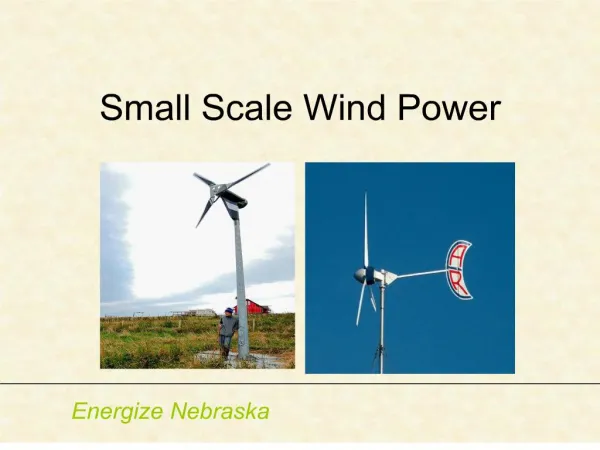
The global small wind power market is experiencing significant growth, driven by the increasing demand for renewable energy solutions, technological advancements, and supportive government policies. Small wind turbines, typically ranging from 1 kW to 100 kW, offer decentralized power generation options for residential, commercial, and agricultural applications. Key Market Drivers 1.Renewable Energy Adoption: The global shift towards sustainable energy sources is driving the demand for small wind turbines as a clean and renewable energy solution. 2.Technological Advancements: Innovations in turbine design, materials, and efficiency are enhancing the performance and cost-effectiveness of small wind turbines. 3.Government Incentives: Subsidies, tax credits, and grants provided by governments are encouraging the installation of small wind turbines. 4.Energy Independence: Small wind turbines offer decentralized power generation, reducing reliance on the grid and enhancing energy security. Regional Insights Asia-Pacific: Dominates the small wind power market, accounting for approximately 46.3% of the global share. Countries like China and India are leading in installations, with China alone having installed 60 MW of small wind turbines in 2022. Europe: Projected to surpass USD 1 billion in market size by 2029, driven by technological advancements and renewable energy initiatives. North America: Experiencing growth due to favorable policies and incentives, with the U.S. leading in installations. Download a Free Sample Report: - https://tinyurl.com/3tpben9j Market Segmentation Axis Type: oHorizontal Axis Wind Turbines (HAWTs): Account for the majority of the market share, approximately 87.4%, due to their higher efficiency and established technology. oVertical Axis Wind Turbines (VAWTs): Cater to niche markets, focusing on urban installations and specialized usages. Grid Type: oOn-Grid Systems: Represent the majority of installations, approximately 81.2%, allowing for excess power to be fed back into the grid. oOff-Grid Systems: Provide power to remote areas without access to the main electricity grid. Capacity: o10 kW to 100 kW: Account for the largest market share, approximately 48.5%, suitable for small businesses and agricultural applications.
Application: oCommercial: Represent the majority of installations, approximately 49.3%, driven by cost savings and sustainability goals. oResidential: Growing segment as homeowners seek energy independence. oAgricultural: Utilized for irrigation and other farm operations. Challenges and Barriers High Initial Costs: The upfront investment for small wind turbines can be significant, potentially deterring adoption. Regulatory Hurdles: Permitting processes and zoning regulations can delay installations. Intermittent Energy Generation: Wind variability can affect the reliability of power supply. Competition from Other Renewables: Solar energy technologies often offer easier installation and maintenance, posing competition. Future Outlook The small wind power market is poised for continued growth, driven by technological advancements, supportive policies, and increasing demand for renewable energy solutions. Innovations in turbine design and materials are expected to enhance efficiency and reduce costs, making small wind turbines more accessible to a broader range of consumers. Read Full Report: - https://www.uniprismmarketresearch.com/verticals/energy-power/small-wind- power