Download
1 / 4
0 likes | 0 Views
CRM workflow automation explained with real examples and a step-by-step implementation guide for Indian businesses to reduce manual work and scale faster. <br>Visit us; https://www.lionobytes.com/products/crm/features/workflow-automation

E N D
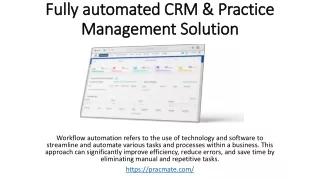
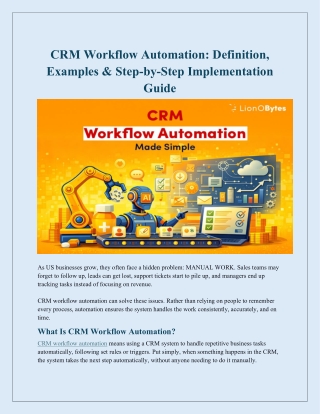
CRM Workflow Automation: Definition, Examples & Step-by-Step Implementation Guide As US businesses grow, they often face a hidden problem: MANUAL WORK. Sales teams may forget to follow up, leads can get lost, support tickets start to pile up, and managers end up tracking tasks instead of focusing on revenue. CRM workflow automation can solve these issues. Rather than relying on people to remember every process, automation ensures the system handles the work consistently, accurately, and on time. What Is CRM Workflow Automation? CRM workflow automation means using a CRM system to handle repetitive business tasks automatically, following set rules or triggers. Put simply, when something happens in the CRM, the system takes the next step automatically, without anyone needing to do it manually.
Here are some examples: •When a new lead is created, the system automatically assigns a follow-up task. •A deal moves to “Won” → an invoice reminder is triggered. •A support ticket is raised → the right agent is notified. This helps businesses operate smoothly even as lead volume and customer interactions increase. Why Workflow Automation CRM Matters for USA Businesses Here are some key benefits: •Reduced lead leakage. •Faster response times. •Better accountability across teams. •Less dependency on individuals. •Improved customer experience. Automation is not about replacing people. Instead, it helps by taking care of repetitive tasks. Common CRM Workflow Automation Examples CRM workflows help with sales, marketing, support, and operations. Below are some practical examples for US businesses. Sales Automation •Assign leads automatically based on where they come from, their location, or what products interest them. •Send reminders to follow up if no one takes action within a certain time. •Move deals to the next stage automatically when customers take certain actions. Marketing Automation •Send emails or WhatsApp messages automatically after someone submits a form. •Send leads to the sales team once they reach a set score. •Group contacts automatically based on how they behave. Support Automation •Create support tickets automatically from emails or web forms. •Assign tickets to the right team based on the type of issue or its priority.
Operations Automation •Notify finance teams when deals are closed. •Track onboarding or implementation steps automatically. •Generate internal alerts for approvals or renewals. These workflows reduce manual coordination and improve consistency. Step-by-Step Guide to Implement CRM Workflow Automation You don’t need complicated setups to start automating; take it step by step. Here’s a simple guide to help you get started. Step 1: Identify Repetitive Processes Begin by listing the tasks your team does every day, such as follow-ups, status updates, notifications, or approvals. These tasks are great options for automation. Step 2: Define Clear Triggers A trigger is what starts the workflow. Examples include: •Lead creation. •Status change. •Form submission. •Ticket update. Being clear about triggers helps your workflows run the way you want. Step 3: Decide the Automated Action Decide what you want to happen after the trigger occurs: •Assign a task. •Send an email or notification. •Update a field. •Change ownership. Make sure your actions are straightforward and fit your needs. Step 4: Test Before Full Rollout Test your workflows with a small dataset first. Make sure tasks go to the right people, notifications arrive on time, and every step is covered. Step 5: Monitor and Optimize Automation isn’t something you set up once and leave alone. Check how it works from time to time and adjust your workflows as your business changes.
How LionO360 CRM Simplifies Workflow Automation LionO360 CRM has workflow automation and ERP features built in, so businesses can avoid using several tools or dealing with complicated integrations. With LionO360 CRM, teams can: •Automate sales, support, and operations in a single system •Keep all departments working from the same set of information. •Cut down on the manual work passed between teams. •Grow your processes without needing to hire more people Since CRM and ERP features are in one platform, automation moves smoothly from lead generation through to post-sale operations. Final Thoughts CRM with workflow automation has become essential for growing US businesses. It adds structure, speed, and reliability to daily tasks, so teams can focus on work that matters most. When used correctly, automation simplifies processes. It also helps businesses grow with confidence. Read more: CRM Workflow Automation: Improve Efficiency and Customer Engagement