Barcode Technology Evolution Transitioning from Linear to 2D Barcodes
This PDF explain how barcode technology is evolving from simple linear lines to powerful 2D codes that store richer data, boost accuracy, and streamline business operations. This guide highlights the shift to QR, Data Matrix, and PDF417 formats, their benefits across industries like healthcare, logistics, and manufacturing, and what the future holds with IoT integration and smart security. Read more on https://www.sundata.in/blogs/barcode-technology-evolution-transitioning-from-linear-to-2d-barcodes.html?utm_source=pdfsubmission&utm_medium=pdf&utm_campaign=contentpromotion


Barcode Technology Evolution Transitioning from Linear to 2D Barcodes
E N D
Presentation Transcript
Barcode Technology Evolution: Transitioning from Linear to 2D Barcodes Barcode Technology Barcode technology uses printed symbols, usually lines or patterns to store information. A scanner reads these symbols to access details such as product info, stock numbers, or tracking IDs. This helps companies and organizations quickly identify and manage goods and data. https://www.sundata.in/
Barcodes are a reliable way to collect information and reduce manual effort. They support faster, more accurate work and are commonly used in retail, manufacturing, healthcare, and transport. Importance of Barcodes in Modern Society Barcodes play a major role in everyday life and business. Their value can be seen in the points below. 1. Efficiency Barcodes speed up tasks like billing, inventory updates, and shipment tracking. This saves time and reduces effort, helping increase productivity. 2. Accuracy Scanning barcodes avoids manual entry, reducing mistakes. This keeps information correct, especially in stock control and order processing. 3. Scalability Barcodes are suitable for small stores and large businesses alike. They follow standard formats, making them easy to use with many systems. 4. Traceability Barcodes track products through the entire supply chain, from production to delivery. This improves transparency and helps meet rules in sectors like food and medicine. https://www.sundata.in/
5. Customer Experience Barcodes make shopping faster and simpler. They support quick billing, correct pricing, product info, self-checkout, and mobile payments. Brief Overview of the Evolution of Barcode Technology Efforts to automate data collection began in the early 1900s. In 1952, Joseph Woodland and Bernard Silver patented the first barcode system. The Universal Product Code (UPC) was introduced in the 1970s, making checkout quicker and improving retail operations. Linear barcodes like UPC and EAN-13 became widely used. Later, 2D barcodes such as QR codes, Data Matrix, and PDF417 were developed to hold more information. The rise of smartphones made scanning easier. Today, barcoding continues to advance alongside technologies like RFID and NFC. Invention of Linear Barcodes Early barcode designs led to the creation of linear barcodes, first patented in 1952 and widely used in retail by the 1970s. Early Days: Linear Barcodes A. Invention of Linear Barcodes Linear or 1D barcodes use horizontal lines of different widths to store information. UPC, introduced in 1974, became the main standard for labeling products. https://www.sundata.in/
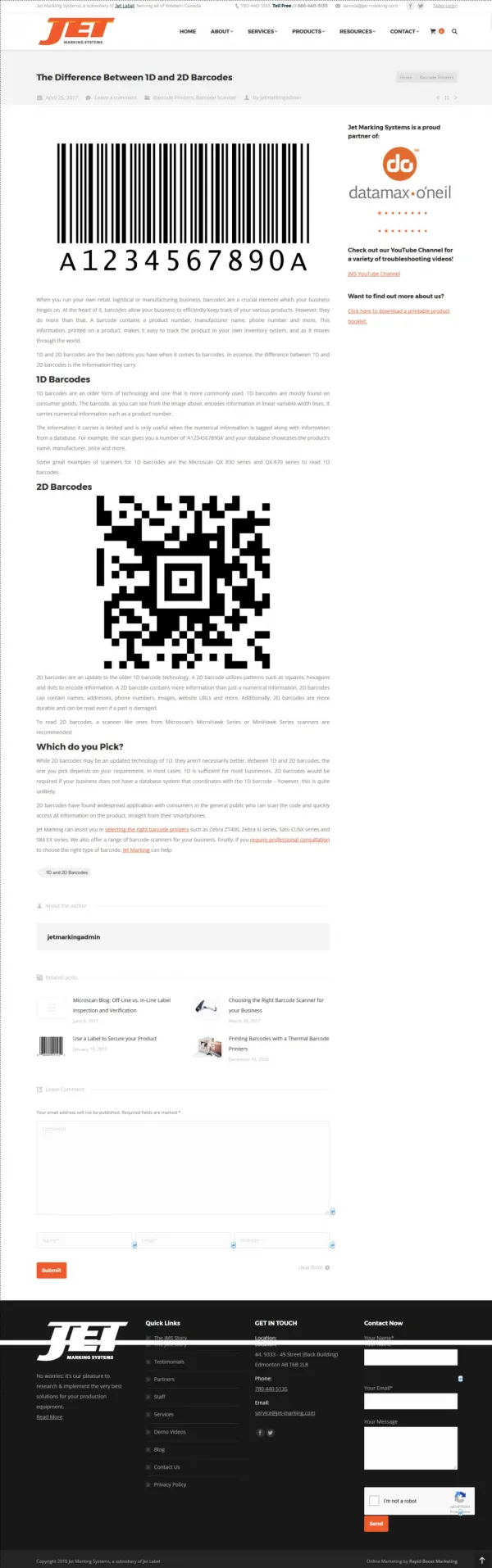
B. Usage in Retail & Logistics Retailers used these codes to speed up checkout and reduce errors. Logistics companies used them to track items from warehouses to stores. Linear barcodes influenced today’s systems, though their limits led to new 2D barcode designs. Limitations of Linear Barcodes Despite being popular, linear barcodes have limited space and are prone to damage. ● Can store only a small amount of data ● Work in only one direction ● Can be unreadable if damaged ● Low error protection Even with these limits, they remain widely used due to low cost and easy setup. Advancements in 2D Barcodes A. Introduction 2D barcodes hold more information in a smaller space. They use square or dot patterns instead of straight lines. B. Comparison with Linear Barcodes They store more data and remain readable even if slightly damaged. https://www.sundata.in/
C. Benefits ● Large data storage ● Strong error correction Useful in many fields like retail, healthcare, and logistics Types of 2D Barcodes A. QR Code 1. Origin Developed in 1994 by Denso Wave in Japan, originally for tracking car parts. 2. Uses ● Marketing ● Online payments ● Tickets and event access ● Digital menus and check-ins B. Data Matrix 1. Structure Made of small squares in black and white that can store a lot of data. 2. Uses ● Marking machine parts https://www.sundata.in/
● Stock management ● Electronics and medicines C. PDF417 1. Features Stores over a thousand characters and uses stacked rows. Offers strong error control. 2. Uses ● ID cards ● Driving licenses ● Passports ● Shipping labels Integration of Barcodes in Various Industries A. Healthcare 1. Electronic Health Records Barcodes help match patients with their medical records, reducing mistakes. 2. Medication Management They verify medicines, track inventory, and avoid errors. https://www.sundata.in/
B. Manufacturing 1. Inventory Control Barcodes track raw materials and products, helping plan supply better. 2. Quality Assurance They help monitor production stages and meet standards. C. Transportation and Logistics 1. Tracking and Tracing Barcodes help track shipments, estimate delivery, and update customers. 2. Supply Chain Optimization They help manage warehouse management, improve stock control, and increase order accuracy. Future Trends and Innovations A. Enhanced Security Barcodes may include stronger security to stop copying or misuse, especially for medicines and luxury goods. B. Integration with IoT Smart barcode readers may connect to cloud systems for real-time tracking. https://www.sundata.in/
C. Biometric Barcodes Future barcodes may hold biometric details for extra security. D. Sustainability Use of eco-friendly materials and digital formats to reduce waste. Conclusion Barcode technology continues to grow and remains important for tracking products, improving business operations, and enhancing customer service. As technology develops, barcodes will remain a key tool for fast, accurate, and efficient work. https://www.sundata.in/