Download

1 / 4
0 likes | 4 Views
Discover why France has become one of the most popular destinations for international students. This blog explores the benefits of studying in France, including affordable education, world-class universities, rich cultural experiences, and strong career opportunities. Learn how a study abroad consultant can guide you through the admission and visa process, helping you make the most of your international education journey. Get insights, tips, and FAQs to plan your future confidently while studying in France.

E N D
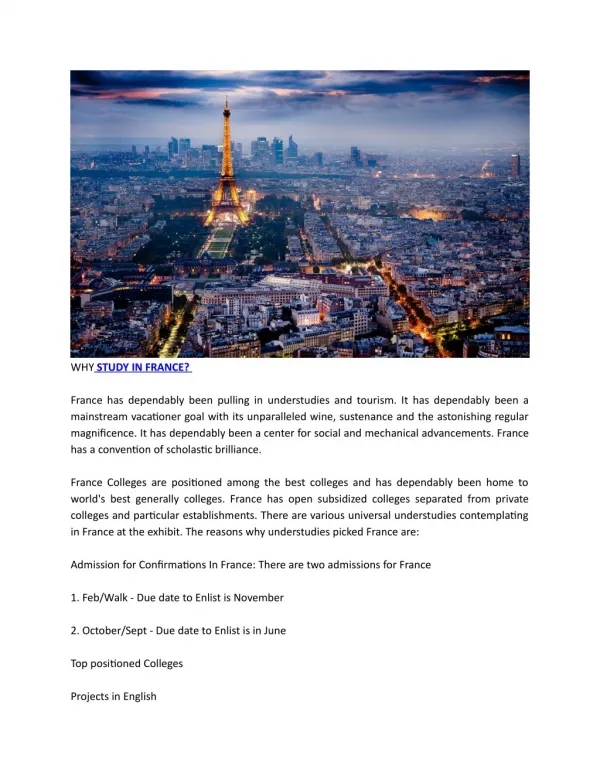
Why more Students Choose to Study in France Today? Studying abroad has become one of the most important steps for students seeking international exposure, advanced education, and career opportunities. Among all destinations, France has emerged as a top choice, attracting students from around the globe. Every year, over 350,000 international students choose to study in France, a number that has steadily grown by nearly 10% annually over the last five years. This rising trend is fueled by France’s world-class education system, affordable tuition, rich cultural experience, and career-oriented opportunities. With the help of a study abroad consultant, students can navigate the complex application and visa process smoothly, making France an accessible and attractive option. The Appeal of Higher Education in France France is known for its prestigious universities and specialized institutions. Programs in engineering, business, arts, and hospitality consistently rank among the top globally. Unlike other study destinations, France offers tuition fees as low as €3,000 per year for public universities, making quality education more accessible. Moreover, the availability of programs in English has grown, with nearly 15% of master’s programs now offered entirely in English. By choosing to study in France, students also benefit from an education system that emphasizes critical thinking, practical experience, and research opportunities. This makes graduates highly employable internationally. A study abroad consultant can help identify
programs that align with students’ career goals while navigating scholarships and funding options. Affordable Cost of Living and Education One of the key reasons why more students choose to study in France is the affordable cost of living compared to other European countries. For instance, monthly expenses in France can range from €800 to €1,200, depending on the city, including accommodation, food, and transportation. Paris, being a cosmopolitan hub, is slightly higher, but smaller cities like Lyon, Nantes, and Toulouse offer more budget-friendly options. France also provides various student benefits, including discounted transportation, cultural access, and healthcare coverage. Working part-time for up to 964 hours per year is legally allowed, enabling students to support themselves financially while gaining professional experience. Rich Cultural and Social Environment France’s culture is world-renowned, from art, music, and cinema to cuisine and festivals. Students studying in France immerse themselves in a multicultural environment, meeting peers from diverse backgrounds. With over 250,000 cultural events annually, there is no shortage of experiences that enrich both personal growth and academic learning. Learning the French language can be an added advantage, and many universities provide language courses to help students adapt. A study abroad consultant often advises students to take these preparatory courses to maximize their educational and cultural experience. Strong Career Opportunities and International Exposure Studying in France opens doors to extensive career opportunities. The country is home to over 31 multinational companies listed among the Fortune Global 500, offering internships and work placements for students. Graduates can also benefit from France’s post-study work visa, which allows students to stay and work for up to two years after graduation. In addition, France’s strategic location in Europe provides easy access to other EU countries, enhancing travel and networking opportunities. This international exposure is invaluable in today’s competitive job market.
Diverse Programs and Research Opportunities France is a hub for innovation and research, particularly in sectors like aerospace, artificial intelligence, fashion, and gastronomy. Students have access to cutting-edge research facilities and mentorship from global experts. Nearly 40% of international students in France enroll in research-focused programs, making it a prime destination for those interested in innovation and advanced studies. A study abroad consultant can guide students toward specialized programs, scholarships, and research grants to ensure they maximize their learning potential. Support Systems for International Students France offers excellent support for international students. Universities provide dedicated offices for student assistance, including housing, health insurance, and academic guidance. Many cities have international student networks that facilitate social integration and professional networking. A study abroad consultant can help students understand these resources beforehand, reducing stress and ensuring a smoother transition. The Advantage of Expert Guidance Navigating the process to study abroad can be challenging, especially when applying to competitive programs. A study abroad consultant provides expert guidance, including selecting the right university, preparing applications, and managing documentation. They also assist with pre-departure briefings, accommodation arrangements, and adapting to life in a new country. With their support, students can focus on academic and personal growth while minimizing common challenges faced by international students. Frequently Asked Questions (FAQ) Q1: Is it necessary to know French to study in France? A1: While some programs are in French, many universities offer courses in English. Learning French is recommended for cultural immersion and part-time work opportunities. Q2: How long does it take to apply for a student visa in France? A2: The visa process typically takes 2 to 3 months, depending on the applicant’s country. A study abroad consultant can assist in preparing the required documents.
Q3: Can international students work while studying in France? A3: Yes, students can work up to 964 hours per year. Part-time jobs can include internships, on-campus roles, or language tutoring. Q4: Are scholarships available for international students? A4: Yes, France offers scholarships through universities and government programs. Consulting a study abroad consultant helps identify the most suitable financial aid options. Q5: What are the living expenses in France? A5: Monthly living costs range from €800 to €1,200, including rent, food, transportation, and personal expenses. Costs vary by city.