BAMS
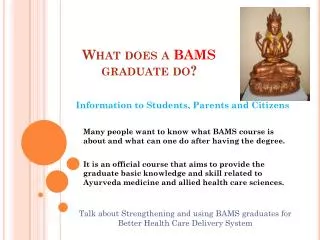
BAMS practitioners, or Bachelor of Ayurvedic Medicine and Surgery professionals, are trained in the ancient system of Ayurvedic medicine, which originated in India over 3,000 years ago. Ayurvedic medicine emphasizes a holistic approach to health, focusing on the balance of body, mind, and spirit to promote overall well-being. The BAMS curriculum typically spans five and a half years, including theoretical coursework and practical training. Students study various subjects such as anatomy, physiology, pharmacology, Ayurvedic pathology, and diagnostic techniques.


BAMS
E N D
Presentation Transcript
Role of BAMS practitioners in multidisciplinary teams, working with allopathic doctors, nutritionists, and therapists. BAMS practitioners and their training in holistic healthcare. BAMS practitioners, or Bachelor of Ayurvedic Medicine and Surgery professionals, are trained in the ancient system of Ayurvedic medicine, which originated in India over 3,000 years ago. Ayurvedic medicine emphasizes a holistic approach to health, focusing on the balance of body, mind, and spirit to promote overall well-being. The BAMS curriculum typically spans five and a half years, including theoretical coursework and practical training. Students study various subjects such as anatomy, physiology, pharmacology, Ayurvedic pathology, and diagnostic techniques. They also learn about dietary counseling, herbal medicine, panchakarma (detoxification therapies), and lifestyle interventions, all within the context of Ayurvedic principles. Upon completing their training, BAMS practitioners are equipped to assess individual health needs and recommend personalized treatment plans that may include herbal remedies, dietary modifications, yoga, and meditation. Their holistic approach aims not only to treat illness but also to prevent disease and enhance overall quality of life. As interest in integrative and alternative healthcare continues to grow globally, BAMS practitioners play a significant role in promoting wellness through Ayurveda. Complementary Therapies and Patient-Centered Care: Integration of Ayurvedic Principles: 1. Herbal Remedies: BAMS practitioners are well-versed in a variety of herbal formulations that can be used to manage symptoms and support healing processes in patients receiving allopathic treatments. For example, herbs like turmeric (Curcuma longa) and ginger (Zingiber officinale) are often used to reduce inflammation and improve digestive health, which can be particularly beneficial for patients undergoing treatments such as chemotherapy.
2. Dietary Modifications: Ayurveda emphasizes the importance of diet based on individual constitution (Prakriti) and imbalances (Dosha). BAMS practitioners can work alongside nutritionists to design personalized diets that support overall health, enhancing the effectiveness of allopathic medications. For instance, a diet rich in antioxidants can complement treatment for chronic diseases, such as cancer or diabetes, improving patient resilience and recovery. 3. Lifestyle Adjustments: Ayurvedic practices encourage healthy lifestyle habits, including yoga, meditation, and daily routines that balance physical and mental well-being. BAMS practitioners can guide patients on how to integrate these practices into their daily lives, thereby reducing stress and improving overall quality of life, complementing the medical treatments they are undergoing. Case Studies and Evidence of Integrated Care: ➔ Case Study - Cancer Care: In a clinical setting in India, an integrated approach involving BAMS practitioners and oncologists demonstrated improved outcomes in cancer patients. Patients received chemotherapy alongside Ayurvedic support, including herbal supplements aimed at boosting immunity and managing side effects. Results indicated that patients experienced reduced nausea and improved appetite, leading to a better quality of life during treatment. ➔ Case Study - Diabetes Management: A collaborative program between BAMS practitioners and endocrinologists focused on managing type 2 diabetes. BAMS practitioners advised patients on personalized diet plans and recommended stress-reduction techniques like yoga and pranayama. This multifaceted approach not only helped in stabilizing blood sugar levels but also empowered patients to take charge of their health. Emphasizing Patient-Centered Care: ➔ Holistic Assessments: BAMS practitioners are trained to assess patients holistically, considering physical, mental, and emotional health. This encompasses understanding patients' needs beyond just medical symptoms, allowing for tailored treatment strategies. For example, a BAMS practitioner might identify lifestyle factors contributing to a
patient's chronic headaches and collaborate with an allopathic doctor to address both the symptom and its root cause. ➔ Patient Empowerment: The incorporation of Ayurvedic principles also fosters patient empowerment. Educating patients about their health, encouraging active participation in their treatment plan, and providing tools for self-care can significantly enhance treatment adherence and satisfaction. This holistic, collaborative approach exemplifies true patient-centered care, where the focus remains on the patient as a whole rather than merely addressing isolated symptoms. The role of BAMS practitioners in adopting complementary therapies within multidisciplinary teams in India is pivotal in promoting patient-centered care. By integrating Ayurvedic principles with conventional medical practices, the approach not only addresses the physical aspects of treatment but also the emotional and psychological well-being of patients, ultimately leading to improved health outcomes and quality of life. Collaboration and Communication: In the context of India's healthcare system, the collaboration between BAMS practitioners and professionals from various disciplines—such as allopathic doctors, nutritionists, and therapists—requires focused strategies to ensure effective communication and coordinated care. Here are some key aspects to consider: ● Challenges to Effective Collaboration: ○ Cultural Differences: Variations in treatment philosophies between Ayurveda and conventional medicine can lead to misunderstandings and resistance. Allopathic practitioners may be skeptical of Ayurvedic practices, while BAMS practitioners may feel undervalued in a predominantly allopathic environment. ○ Integration of Medical Systems: Differences in diagnostic methods, treatment modalities, and terminologies can create gaps in communication. This can lead to fragmented care and less optimal patient outcomes.
○ Regulatory Framework: Navigating the regulatory landscape in India, which sometimes restricts the practice of integrated medicine, can present challenges in establishing collaborative frameworks. ● Strategies for Fostering Collaboration: ○ Regular Team Meetings: Establishing routine interdisciplinary meetings allows team members to discuss patient cases collaboratively, share insights, and collectively develop treatment plans that incorporate both Ayurvedic and allopathic approaches. These meetings can enhance trust and camaraderie among team members. ○ Shared Electronic Health Records (EHR): Implementing a shared EHR system can facilitate the smooth exchange of patient information, treatment histories, and progress notes. This ensures that all team members have access to the same data, promoting informed decision-making. ○ Interdisciplinary Training and Workshops: Organizing training sessions or workshops that focus on understanding each discipline’s strengths and practices can enhance mutual respect and knowledge. BAMS practitioners can educate their colleagues about Ayurvedic concepts, helping to bridge the gap in understanding. ○ Collaborative Treatment Plans: Developing integrated treatment plans that outline the roles of each practitioner can ensure that all team members are on the same page. This plan should emphasize how Ayurvedic methods can complement allopathic treatments, addressing both physical and holistic health. ● Role of BAMS Practitioners in Education and Advocacy: ○ Educating Team Members: BAMS practitioners can play a significant role in enlightening allopathic doctors and other team members about the benefits and rationale of Ayurvedic practices. This educational effort can dispel misconceptions and foster a culture of respect for different medical philosophies. ○ Patient Education: BAMS practitioners can also assist in educating patients about the integration of both treatment methodologies, helping them understand how a holistic approach can enhance their overall health and wellbeing. ○ Advocacy for Integrated Practice: BAMS practitioners can advocate for the inclusion of Ayurveda in mainstream healthcare discussions and policies,
emphasizing their role within multidisciplinary teams to promote collaborative practices and improve patient outcomes. By addressing these challenges and implementing effective strategies for collaboration and communication, BAMS practitioners can significantly enhance their contributions to multidisciplinary teams in India, leading to improved patient care and outcomes. This integrated approach can also help raise awareness and appreciation for the value of Ayurveda alongside conventional medical practices, ultimately benefiting the healthcare system as a whole. Research and Evidence-Based Practices: In India, the integration of Ayurvedic practices into mainstream healthcare has gained momentum, especially in the context of increasing interest in holistic and alternative therapies. To support this integration, it is essential to establish a robust evidence base that validates Ayurveda’s efficacy when used alongside conventional medicine. BAMS practitioners are at the forefront of this research initiative, contributing significantly to studies that aim to bridge the gap between traditional and modern healthcare approaches. Role of BAMS Practitioners in Research Initiatives 1. Conducting Clinical Trials: a. BAMS practitioners are often involved in designing and implementing clinical trials that assess the efficacy of Ayurvedic treatments. These trials not only evaluate specific therapies (e.g., herbal formulations, Panchakarma treatments) but also explore the safety and appropriateness of these interventions for various health conditions. b. Collaborating with institutions such as the All India Institute of Ayurveda (AIIA) and various universities, BAMS practitioners help ensure that clinical trials adhere to rigorous scientific standards while being rooted in Ayurvedic principles. 2. Participating in Interdisciplinary Research: a. BAMS practitioners frequently collaborate with allopathic doctors, nutritionists, and researchers from various fields to conduct interdisciplinary studies. These collaborations help evaluate the synergistic effects of Ayurveda and allopathic
approaches in managing chronic diseases like diabetes, hypertension, and autoimmune disorders. b. These teams work towards comprehensive studies that consider both the physiological and psychological aspects of health, leveraging the holistic nature of Ayurveda, and thereby promoting patient-centric care methods. 3. Documenting Case Studies and Evidence Collection: a. BAMS practitioners play a vital role in collecting and documenting case studies that demonstrate successful outcomes of Ayurvedic interventions. This qualitative data can provide compelling evidence for the efficacy of specific treatments in real-world settings. b. Furthermore, practitioners may engage in epidemiological studies to assess the prevalence and effectiveness of traditional practices, contributing valuable data to enrich the understanding of Ayurveda’s role in public health. Importance of Building an Evidence Base 1. Validating Ayurvedic Treatments: a. A robust evidence base can help validate Ayurvedic treatments, facilitating their acceptance in mainstream medical practice. This validation process may involve systematic reviews, meta-analyses, and randomized controlled trials to ensure that Ayurvedic interventions are supported by scientific evidence. b. These studies can also help identify specific contexts where Ayurvedic treatments may be most beneficial, leading to standardized protocols for integrated healthcare. 2. Promoting Collaborative Approaches: a. Building an evidence base that incorporates findings from both Ayurvedic and allopathic research promotes collaborative healthcare approaches between practitioners of both systems. It helps break down silos in healthcare, encouraging a more holistic view of patient care that values both traditional and modern methodologies.
b. This integration ultimately leads to improved patient outcomes, higher patient satisfaction, and reduced healthcare costs by preventing complications and enhancing the overall quality of care. 3. Enhancing Public and Professional Awareness: a. As research validates the efficacy of Ayurvedic practices, it helps raise public awareness and confidence in these treatments. Educating healthcare professionals about the potential benefits of integrating Ayurveda into their practice can foster a more inclusive healthcare environment. b. Furthermore, the promotion of evidence-based Ayurvedic practices contributes to policy discussions around integrative medicine in India, influencing healthcare regulations and educational frameworks. The role of BAMS practitioners in research and evidence-based practices is crucial for the integration of Ayurveda into mainstream healthcare in India. By actively participating in clinical trials, interdisciplinary studies, and documentation of case outcomes, BAMS practitioners not only contribute to the validation of Ayurvedic treatments but also foster collaborative approaches that benefit patient care. As the evidence base grows, so does the potential for Ayurveda to be recognized as a valuable partner in holistic health, ultimately leading to improved healthcare delivery in India.





![Climate Monitoring Products: BAMS experience Andrew Watkins [Australia]](https://cdn2.slideserve.com/4346849/slide1-dt.jpg)