Understanding Learning Beyond the Classroom
This project focuses on experiential and extracurricular learning opportunities offered by GD Goenka beyond the traditional classroom. It explores how sports, arts, cultural programs, and leadership activities contribute to well-rounded student development. The study highlights the importance of hands-on learning, teamwork, and creative expression in building confidence and practical skills.<br>For more information, you can explore this topic further here: https://gdgoenkasonepat.com/choosing-the-best-boarding-school-in-ncr/

Understanding Learning Beyond the Classroom
E N D
Presentation Transcript
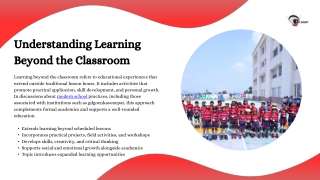
Understanding Learning Beyond the Classroom • Learning beyond the classroom refers to educational experiences that extend outside traditional lesson hours. It includes activities that promote practical application, skill development, and personal growth. In discussions about modern school practices, including those associated with institutions such as gdgoenkasonepat, this approach complements formal academics and supports a well-rounded education. • Extends learning beyond scheduled lessons • Incorporates practical projects, field activities, and workshops • Develops skills, creativity, and critical thinking • Supports social and emotional growth alongside academics • Topic introduces expanded learning opportunities
Why Learning Beyond the Classroom Matters • Learning beyond the classroom is relevant because it allows students to apply knowledge in real-world contexts. It fosters problem-solving, teamwork, creativity, and leadership while complementing academic achievements, helping learners develop life skills essential for holistic growth. • Reinforces classroom knowledge with practical experience • Promotes creativity, problem-solving, and leadership • Encourages collaboration and teamwork • Enhances personal and social skills • Supports holistic student development
What Learning Beyond the Classroom Involves • This type of learning includes extracurricular programs, experiential projects, community engagement, workshops, and clubs. Students gain exposure to hands-on experiences, social activities, and skill-building opportunities that extendbeyond the traditional curriculum. • Experiential projects and workshops • Participation in clubs and competitions • Community service and social learning • Hands-on skill development • Personal growth alongside academic development
How Schools Implement Learning Beyond the Classroom • Schools implement learning beyond the classroom through scheduled activities integrated with academics. Teachers and mentors guide studentsthrough projects, clubs, and field experiences. Structured oversight ensures learning is meaningful, safe, and aligned with educational objectives. • Structuredextracurricular and co-curricular programs • Teacher-guided projects and mentorship • Field trips and experiential learning • Integration with academic schedules • Balanced development of skills and knowledge
Who Benefits from Learning Beyond the Classroom • Learning beyond the classroom benefits students by providing practical exposure, skill-building, and confidence. Teachers gain opportunities to facilitate experiential learning, while families observe development in competencies, creativity, and social skills. This approach complements academic learning and promotes holistic growth. • Students develop practical, social, and creative skills • Teachers facilitate experiential and project-based learning • Families observe well-rounded student growth • Enhances academic, personal, and social development • Supports holistic education outcomes