zymbel.com (1)
Best Yogurt Thermometer for USA kitchens. Dual-probe precision, stainless steel, instant read and exclusive Cooling-Alert. Perfect for yogurt making. <br>

zymbel.com (1)
E N D
Presentation Transcript
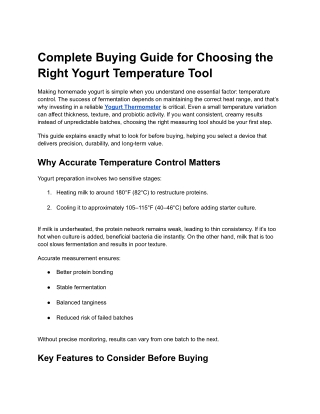
Complete Buying Guide for Choosing the Right Yogurt Temperature Tool Making homemade yogurt is simple when you understand one essential factor: temperature control. The success of fermentation depends on maintaining the correct heat range, and that’s why investing in a reliable Yogurt Thermometer is critical. Even a small temperature variation can affect thickness, texture, and probiotic activity. If you want consistent, creamy results instead of unpredictable batches, choosing the right measuring tool should be your first step. This guide explains exactly what to look for before buying, helping you select a device that delivers precision, durability, and long-term value. Why Accurate Temperature Control Matters Yogurt preparation involves two sensitive stages: 1. Heating milk to around 180°F (82°C) to restructure proteins. 2. Cooling it to approximately 105–115°F (40–46°C) before adding starter culture. If milk is underheated, the protein network remains weak, leading to thin consistency. If it’s too hot when culture is added, beneficial bacteria die instantly. On the other hand, milk that is too cool slows fermentation and results in poor texture. Accurate measurement ensures: ● Better protein bonding ● Stable fermentation ● Balanced tanginess ● Reduced risk of failed batches Without precise monitoring, results can vary from one batch to the next. Key Features to Consider Before Buying
1. Accuracy Rating The most important specification is accuracy. Look for a device that offers ±1°F (or ±0.5°C) precision. Products without clear accuracy details should be avoided. Even a small deviation of a few degrees can significantly affect fermentation quality. 2. Fast Response Time Milk cools rapidly once removed from heat. A tool that provides readings within 2–4 seconds helps you add culture at the exact right moment. Slow devices increase the risk of missing the ideal temperature window. Fast response equals better control. 3. Wide Temperature Range Choose a thermometer that measures at least from 32°F to 220°F (0°C to 104°C). This ensures it covers both heating and fermentation stages without limitation. A narrow range restricts flexibility. 4. Digital vs. Analog Options Both styles work, but each has its advantages. Digital Models ● Quick readings ● Clear numeric display ● Compact and easy to use Analog (Dial) Models ● No batteries required ● Durable mechanical design ● Traditional and simple For frequent yogurt preparation, digital models usually provide better speed and readability.
5. Probe Material and Length A stainless steel probe is ideal for hygiene and durability. It resists rust and is easy to sanitize after dairy use. Length also matters. A probe of at least 4–5 inches keeps your hands away from steam when measuring hot milk in deep pots. 6. Water Resistance Milk splashes are common during heating and stirring. A water-resistant or splash-proof design protects internal components and increases longevity. This feature is often overlooked but very important. 7. Calibration Capability Over time, thermometers may drift slightly from accurate readings. A model that allows recalibration helps maintain long-term precision. You can test accuracy using: ● Ice water (32°F / 0°C) ● Boiling water (212°F / 100°C at sea level) Maintaining calibration ensures consistent fermentation results. Matching the Tool to Your Kitchen Setup Your cooking method should influence your decision: ● Stovetop preparation: A longer probe with clip attachment helps monitor temperature continuously. ● Instant Pot or yogurt maker: A compact instant-read digital device works best for quick checks. ● Frequent batch production: Invest in a high-quality model built for repeated use. Choose according to how often you make yogurt and the volume you prepare.
Common Mistakes to Avoid 1. Buying the cheapest product without checking specifications 2. Ignoring response time 3. Choosing overly complex cooking thermometers with unnecessary features 4. Overlooking build quality Focus on reliability and precision rather than extra functions. Final Thoughts Selecting the right temperature tool may seem like a small decision, but it plays a major role in achieving consistent homemade yogurt. When heat levels are controlled accurately, fermentation becomes predictable, texture improves naturally, and flavor balances perfectly. Look for accuracy, fast readings, durable materials, and ease of cleaning. Once you invest in a dependable thermometer, you remove guesswork from the process and gain full control over your results. With the right approach and proper temperature monitoring, every batch can turn out smooth, thick, and satisfying.