The Growing Food and Beverage Flavor Industry in India
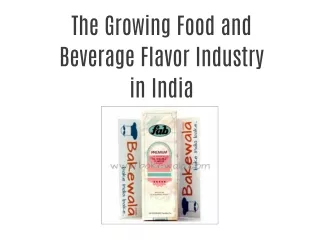
The Indian food and beverage flavor industry had been static throughout the decades, seeing a sudden consistent surge in the 2000s. From major industries producing packaged foods to small local bakeries, the flavor industry in India today has become valuable to the food and beverage industry. In 2018, the Indian flavor industry had stood at around $400 million. Extensive research claims there will be a 13% surge where this flavor market will stand at $875 million by 2024. Several social and economic factors have led to this boom in the industry. And enterprises too motivated by this rise in business are making impressive strives in their produce, modernizing flavors and their manufacturing process. The Indian food and beverage flavor industry are primarily categorized into three types u2013 nature identical flavors, artificial flavors, and natural flavors. For the most part, these u2018nature identical flavorsu2019 have seen far more popular than the other two, making up for half the flavor marketu2019s economy in 2018 and continues to be the major player. Chemical flavors, however a great taste additive, can pose health risks. Fab Flavors & Fragrance, keeping this in mind has been producing flavors that are in several forms, but all-natural. Since India is majorly an agricultural country and takes up a significant part of the Indian Economy, including the food and beverage industry. The Government continues to take impressive strides in these sectors. And the recent surge in this Indian Flavor Market has been encouragingly backed by it providing significant investment opportunities to the industry. Factors Catering to the Evolution of The Food and Beverage Flavor Manufacturers of India It has been established that the flavor market is overseeing constant growth but what are the changes that have led to this? Increased Urbanization. Increase in discretionary income. Growth of bakeries, confectionaries, snack and beverage companies and their development requiring a steady growth of the flavor industry. Upward mobility in the Indian Economy. The shift in focus of the Indian government and general consumers to growing health concerns posed by synthetic convenient food and beverages. The boost in the flavor market has aided the government in addressing specific general health requirements. The growing awareness and change in lifestyle and taste palate among the citizens who upon awareness demands the availability of options. The growing conscious youth. Globalization that has encouraged more Indian to travel overseas and adapt to otheru2019s cultures and flavors, popularizing them in India as well. The technological advancement has enabled various flavor manufacturers to develop new, successful, unique flavors maintaining rigorous competition among these brands. Steady development cannot be maintained without consistent supply and innovative measures on the behalf of the manufacturers and a well-balanced rising demand of the population. Fortunately, the Indian Flavor market does not lack in either. The flavor industry had mostly been limited to industrial entities such as food processing and beverage manufacturing brands. Enterprises such as Fab Flavors & Fragrance P. Limited expanded their wings to more localized entities improving profits significantly. Another significant growth of branch is the experimenting and creating of new flavors regularly through extensive research and technology. Fab Flavors and Fragrance has its copious number of innovative as well as general flavor range. Thus, the Flavor Market hasnu2019t just broadened with its distributors but extensively with their flavors as well. For instance here are 10 common and uncommon flavors, mass-manufactured by Fab Flavors & Fragrance include u2013 Fennel, Aam Panna, Basil, Bavarian Cream, Brandy, Cheesecake, Cola, Cotton Candy, Jalapeno, Paani Puri, and so on. There has also been an impressive increase in the forms of flavors. That is for better suitability to specific items, Fab Flavors & Fragrance has enabled the production of flavors in the forms of solid concentrates, oil-soluble liquids, water-soluble liquids, emulsions, extracts, powders, etc. Today major and minor industrial sectors such as u2013 dairy, bakery, confectionery, processed food brands, beverage, restaurants, etc. are making more and more use of new manufactured flavors. From biscuits to cup noodles to Indian sweets and ice-creams, most food products are experimenting with these usual and unusual flavors. Not only more global flavors are seeing an increase in usage in India but exotic Indian flavors such as paan, coriander, asafoetida, coconut, and even Indian Vegetable flavors are getting popular among Indian and global consumers.
24 views • 1 slides