Download
1 / 6
60 likes | 78 Views
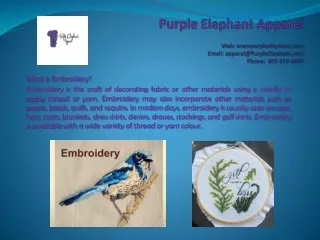
Embroidery is the craft of decorating fabric or other materials using a needle to apply thread or yarn. Embroidery may also incorporate other materials such as pearls, beads, quills, and sequins. In modern days, embroidery is usually seen on caps, hats, coats, blankets, dress shirts, denim, dresses, stockings, and golf shirts. Embroidery is available with a wide variety of thread or yarn colour.

E N D
Purple Elephant ApparelWeb: wwwpurpleelephant.comEmail: apparel@PurpleElephant.comPhone: 801-319-2659 What is Embroidery? Embroidery is the craft of decorating fabric or other materials using a needle to apply thread or yarn. Embroidery may also incorporate other materials such as pearls, beads, quills, and sequins. In modern days, embroidery is usually seen on caps, hats, coats, blankets, dress shirts, denim, dresses, stockings, and golf shirts. Embroidery is available with a wide variety of thread or yarn colour.
Basics of Hand Embroidery Embroidery is done for making a fabric beautiful with colourful designs with the help of needle and threads. It may be used to embellish almost everything, from the smallest handkerchief to big home furnishing like even curtains or bedcovers. Different types of garments including that of children, furnishings, such as bed sheets, pillow covers, table cloth, wall hangings, etc. a
History and Embroidery Terminology Embroidery is being used from centuries, there are traces of embroidery work from ancient times from all over the world, more so from the eastern countries. These design inspirations include natural, floral, geometric, abstract, nursery designs, tribal, mythological, architectural designs, etc History: It is the rich, worldwide tradition of embroidery which makes it such a fascinating craft. People have been decorating fabrics with ‘stitches’ for centuries which reiterates that embroidery is perhaps one of the most ancient needle crafts. Many of the embroidery designs have their roots in styles popular over the last few centuries. The ancient civilizations and their history, sculptures, paintings and vases depict thread work embroidery and its use on clothing. Mostly, embroidered clothing, religious crafts and household textiles have been a mark of luxury and status in many cultures including ancient Persia, India, China, Japan, and Europe.
Embroidery terms Some common embroidery terms are given below: Design: In embroidery, the term design is used for a motif(s), which is decorated with the different stitches of embroidery Embroidery machines: These machines are specialized for different types of embroidery. They are manually or motor operated. These Notes Unit 1.indd 6 16-07-2018 12:35:38 Basics of Hand Embroidery 7 days, embroidery is done on computerized embroidery machines also. Filling stitches: Long and short, satin, close herring bone, fishbone are considered as filling stitches in embroidery. Filling stitches cover large areas and they generally have a flat look. Finishing: This process is performed after embroidery work is completed. This includes trimming loose threads, removing stains, cutting or tearing away excess backing, pressing or steaming to remove wrinkles, etc.
Practical Exercise Activity 1: Prepare a chart of any 10 embroidery terms. Material Required : Chart sheet Colorful pens/ sketch pens 3. Ruler 4. Pencil 5. Eraser Procedure: Cut the chart sheet in A3 size. Write any 10 embroidery terms on the chart. Decorate the sheet. Attach the sheet on the drawing board of your classroom.
Get in Touch Visit Us www.purpleelephant.com Sales/Support Phone 801-319-2659 Sales/Support Email Apparel@PurpleElephant.com Find Us On





![Vision Embroidery INC. [Custom Logo Business Apparel]](https://cdn4.slideserve.com/8160851/vision-embroidery-dt.jpg)