Download
1 / 22
410 likes | 1.39k Views
Natural Disasters. Jill Brookes Saks Elementary Calhoun County Schools – Technology Integration Project 2005. Types of Natural Disasters. Tornadoes Hurricanes Earthquakes Volcanoes Floods Tsunamis Winter Storms Wildfires. Tornadoes.

E N D
Natural Disasters Jill Brookes Saks Elementary Calhoun County Schools – Technology Integration Project 2005
Types of Natural Disasters • Tornadoes • Hurricanes • Earthquakes • Volcanoes • Floods • Tsunamis • Winter Storms • Wildfires
Tornadoes • Rotating, funnel-shaped clouds from powerful thunderstorms • Winds up to 300 MPH capable of producing major damage • More occur in the United States than anywhere else in the world; they occur in every state in America. • Related Websites: FEMA for Kids National Geographic: Nature’s Fury Scholastic Weather Watch National Geographic: Tornado Chasers
Tornado Preparation • Visit this website for tornado safety tips for home, school, outdoors, mobile homes, and large buildings. National Weather Service: Tornado!
Effects of Tornadoes in Alabama Tuscaloosa County: December 16, 2000
Massive severe storms occurring in the tropics Winds greater than 75 MPH Clouds & winds spin around the eye Produce heavy rains, high winds, large waves, and spin-off tornadoes Related Websites: NOAA: HurricanesTropical Twisters National Geographic Kids – Hurricane! BrainPop movie Hurricanes
Hurricane Preparations • Visit this website to learn more about preparing for the effects of hurricanes and tropical storms. Hurricane Preparedness for Kids
Effects of Alabama Hurricanes Hurricane Frederick - 1979 Hurricane Ivan 2005
Shaking caused by movements of plates in the earth’s crust Occur along faults – borders between two plates Occur most often along the Ring of Fire Related Websites: National Geographic: Earthquakes Exploratorium Faultline Project USGS: Earthquakes for Kids Earthquakes
Preparing for Earthquakes • Visit this site to learn more about earthquakes. Scroll down through the page to discover valuable tips for earthquake safety. Weather Wiz Kids: Earthquakes
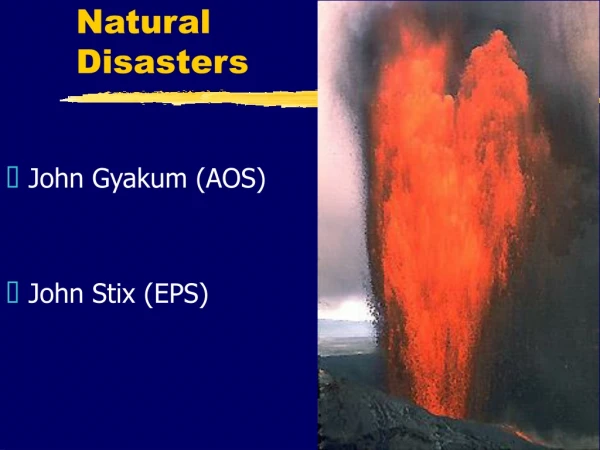
Volcanoes • More than 500 active volcanoes in the world; over half in the Ring of Fire • Pressure builds below the earth’s surface producing eruptions of lava, rock, and volcanic gases • Related Websites: National Geographic Kids – Volcano! Build a Volcano Activity Volcano World Virtual Field Trips
Preparing for a Volcano • Visit this site for safety tips before, during, and after a volcano. Weather Wiz Kids: Volcano Safety
Floods • Result from heavy rains • May involve rivers overflowing, storm surge/ocean waves, & dams or levees breaking • Most common natural hazard • Flashfloods = floods that happen very fast • Related websites: PBS: In Focus – Floods! How TVA Stops Floods Nova – Hot Science: The River’s Gift
Flood Preparations • Visit this site to learn more about floods, and scroll down to discover important flood safety tips. Weather Wiz Kids – Rain and Floods
Tsunamis • Form as a result of earthquakes, volcanoes, or landsides under the ocean • Waves grow taller as they reach the coast • Four out of Five occur in the Ring of Fire • Over 200,000 people killed in the 12/26/05 Indian Ocean tsunami • Related Websites: National Geographic Kids – Killer Wave! Pacific Tsunami Museum – Student Corner PBS – Savage Earth: Tsunamis
Tsunami Preparedness • Visit this website for important tips for surviving a tsunami. FEMA Hazards Fact Sheets: Tsunami
Effects of Tsunamis Indian Ocean Tsunami – December 26, 2005
Winter Storms • May include snow, ice storms, sleet, freezing rain, and extremely cold temperatures • Most deaths occur in automobiles • Storms may cause widespread power outages • Related Websites: National Weather Service: Winter Storms Risk Watch: Severe Winter Storms Scholastic – Winter Storms
Winter Storm Preparations • Visit these sites for tips on how to prepare for a winter storm. CDC: Winter Storm Facts Winter Storm Fact Sheet
Wildfires • Occur in forests, grasslands, and wooded areas • Most common causes: lightning and human accidents • Burn more than 4 million acres in the U.S. each year • Related Websites: Smokey Bear: Kids National Geographic: Wildfires Dialogue for Kids – Wildfire Facts
Preparing for Wildfires • Visit this site to learn important tips for protecting your family and home during a wildfire. Risk Watch: Wildfires
Assignment • Using what you have just learned, choose the natural disaster that interests you the most. • Family Disaster Plan: Imagine that the disaster you have chosen is about to strike your town. How would your family prepare? Think about the preparations that you could make to help protect your family. Write an expository paragraph explaining the steps you would take to prepare for the disaster. • Disaster Supply Kit: Think about the materials and supplies that would help your family survive a natural disaster. On your big paper, draw and label the contents of a good disaster supply kit.