Download
1 / 25
250 likes | 574 Views
Hurricane Ike. Virginia Kennedy, RN, MS, CIC Infection Prevention & Management Associates. Pre-event. The hospital was successfully evacuated on Friday prior to the hurricane's landfall. There were no patients or staff in the hospital during the hurricane . . Pre-event.

E N D
Hurricane Ike Virginia Kennedy, RN, MS, CIC Infection Prevention & Management Associates
Pre-event The hospital was successfully evacuated on Friday prior to the hurricane's landfall. There were no patients or staff in the hospital during the hurricane.
Pre-event • Communication to receiving facility regarding isolation patients • Plans for sterile supplies • Temperature and humidity issues • Transportation of sets and supplies • CSPD • OR • Cardiac lab • Labor and Delivery • Facility Expectations of Infection Prevention • Communications
Pre-event From All Nurses…. Going to the lock down at the hospital I had all my essentials: air mattress & pump, battery operated tv (although after Feb it won't work anymore), toiletries, enough clothes and scrubs for three days
Pre-event • Facility expectations • A team to be present in facility for event • B team to provide immediate relief or • C team for clean up and recovery • Communications • Cell phone – numbers, chargers, hand crank charges • Text messaging
Pre-event • Know facility water source • City • Dependent on electric pump? • Well • Meets potable water standards? • Pump? • Determine if water will need to be tested • Have contract service on standby • Alternative source • Implications for ice machines
Pre-event • Water supplies • Drinking/cooking • Toileting (fill bathtubs) • Hand hygiene • EVS additional supplies • Linen • Sharps containers • Ensure supplies for isolation • Gowns • Gloves
Pre-event • Sterile supplies • Storage in controlled temperature/humidity • Instrument processing • Additional high level disinfectant? • Sufficient disposable sterile supplies • Contract for dehumidifiers and wet vacs • Contract construction workers on hand to build emergency containments • Establish childcare and pet care guidelines • Vaccine storage (occupational health)
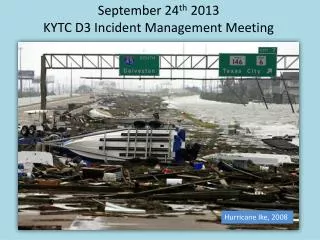
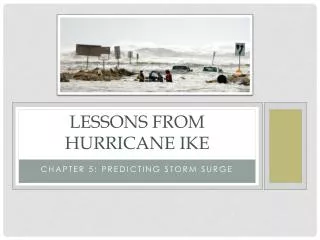
Flooding over access road 523 to Surfside beach, caused by Hurricane Ike forming in the Gulf of Mexico, is seen near Surfside Beach, Texas September 12, 2008. (REUTERS/Carlos Barria) #
During • Observe floors for condensation (slippery) • Round on bathroom facilities (for families and others) to ensure cleanliness • Observe for floods and damage (ceiling/windows etc) • Complete all risk assessments for containment • Potentially implement alternative high level disinfection • Review food preparation
After 30 inches of water in the building after Ike struck ………. Sept. 13.
Water damage • Inventory all water damaged areas, building materials and furnishings. • Special attention should be given to identify carpet under cabinets, furnishings • Use moisture meter to identify extent of water damage to drywall • Cut 12 inches above • Remove wet walls and insulation within 24 hours • If >24 hours, or previous water damage has caused microbial/fungal growth • Extensive controls • Ceiling tiles • Remove wet tiles within 24-48 hours
Major storms or other natural disasters sometimes cause major outages - affecting a large number of customers over an extended period of time.
After • Boil water ban • Alternative sources • Have testing completed asap • Ice machines • Sterilizers • Steris 1 • Conflicting statements given to various hospitals • Issues with water • Sterile supplies • When operating rooms would be opened • Key learning: Infection Preventionists should be part of decision making group
After-CSPD • Autoclaves inspected, cleaned and re-commissioned? • Does steam system meet AAMI standards? • Sterile supplies compromised? • Reprocessed • Replaced • Steris I filter replaced?
After - Laboratory • Emergency power available ? • Has essential equipment, including biological safety cabinents, been inspected, cleaned and disinfected? • Have damaged or contaminated reagents and supplies been replaced?
After – Operating Room • Any damage to sealed flooring and ceilings? • Do sterile supplies need reprocessing? • Autoclaves inspected? • Have System 1 machines had a couple of loads run (if under boil water order) then filler changed before running BI loads? • Evaluation for electrical hazards? • Scrub sinks functioning properly? • Enough air exchanges per hour? • Particle counts or cultures been performed and results acceptable? • Air filters changed?
After-Pharmacy • Have damaged or contaminated meds/solutions been replaced? • Refrigerators at proper temperature? • Clean and disinfected? • Had admixture room hood been recertified and filters changed? • Has the medication compounding area been thoroughly disinfected?
After – Food Service • Has stored food been inspected for damage and discarded if unsafe? • Ice-machines and refrigerators cleaned and sanitized? • All food contact surfaces cleaned and sanitized? • Pest control systems been restored? • Does Health department need to inspect?
After- All Patient Care • Porous furniture and mattresses that were wet been discarded? • Linens laundered? • All patient care surfaces cleaned and disinfected? • Medications and supplies that were damaged or contaminated discarded? • Ice machines flushed, cleaned and disinfected?
Patient Education Keep Food and Water Safe after a Natural Disaster or Power Outage INFECTION PREVENTION TIPS FOR FLOOD AND HURRICANE SEASON
Critical Resources • CDC • Natural Disasters Remediation and Infection Control Considerations for Reopening Healthcare Facilities Closed Due to Extensive Water and Wind Damage • Disaster Safety – Patient Education • AAMI ST79 • University of Minnesota • Fungal abatement • HVAC System • Decontamination • Managing Water Infiltration • APIC
Chance favors only the prepared Louis Pasteur