Download
1 / 4
40 likes | 158 Views
Surface ozone is a natural atmospheric gas formed by sunlight reacting with oxygen molecules. While the ozone layer in the stratosphere protects us from harmful UV rays, ground-level ozone can pose serious health risks. It interacts dangerously with living tissues and structures, making it an important environmental concern linked to air pollution. Measuring surface ozone concentration is crucial; techniques involve using chemical test strips to determine ozone levels in parts per billion, which can vary due to pollution and weather conditions. Knowledge of these levels helps assess environmental impacts.

E N D
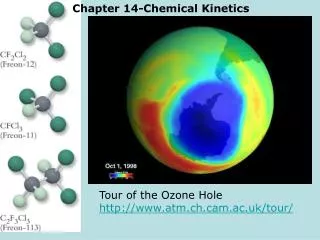
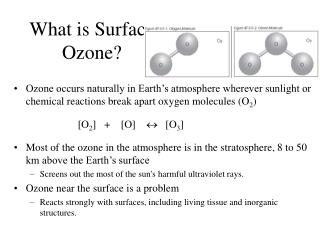
What is Surface Ozone? • Ozone occurs naturally in Earth’s atmosphere wherever sunlight or chemical reactions break apart oxygen molecules (O2) [O2] + [O] [O3] • Most of the ozone in the atmosphere is in the stratosphere, 8 to 50 km above the Earth’s surface • Screens out the most of the sun's harmful ultraviolet rays. • Ozone near the surface is a problem • Reacts strongly with surfaces, including living tissue and inorganic structures.
Why Measure Surface Ozone Concentration? • Ozone is a major product of air pollution and globally its abundance is unknown • The amount of ozone present affects many other trace gases in the air • Knowing the amount of ozone helps assess the degree to which it is an environmental problem
How to Measure Surface Ozone • Use a chemical test-strip that changes color in the presence of ozone • Expose the chemical test-strip to outside airfor one hour • Read the test-strip using a hand-held scanner • The unit of measurement is a part per billion • Cloud conditions, wind direction and current atmosphere temperature must also measured to help data interpretation • Knowing relative humidity is helpful as well
Significant Values • Average concentrations range from almost 0 ppb to over 150 ppb depending on time of year and geographic location • In extremely polluted conditions ozone can reach 200 ppb and more • Levels of surface ozone exceeding 80 ppb for 8 hours or longer are considered harmful for most living things