Download

1 / 21
210 likes | 340 Views
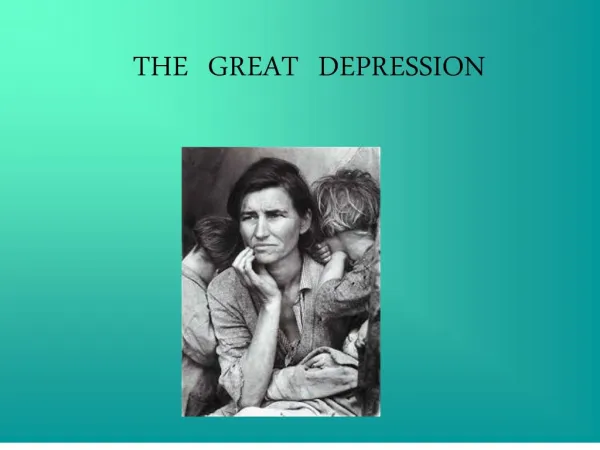
The Great Depression profoundly affected the American landscape, pushing millions into despair as unemployment soared to 24.9% by 1933. With drastic cuts in income and rising poverty, families faced eviction and hunger, relying on soup kitchens and makeshift shelters. Rural America suffered from plummeting commodity prices and devastating droughts, leading to the Dust Bowl. As communities struggled, the strength of the American spirit shone through, with people banding together to survive the hardships and redefine the American Dream in the face of adversity.

E N D
The Great Depression Sect 2 – Americans Face Hard Times
M.I. • In a time of extreme hardship, Americans will develop a character and a will that will overcome economic ruin and restore prosperity.
Misery and Despair Grip America’s Cities • Few understood why the crash happened. • Many understood the impact of the crash. • Loss of jobs and homes • The Great Depression touched every American either through experience or by knowing someone affected.
Searching for a Job and a Meal • By 1933, unemployment up to 24.9%. • Btw 1921-29 never above 3.7%. • People found their hours cut and eventually were laid off. • No jobs • People cut back on food, clothing, heat. • Sold furniture, pawned jewlery.
1930- 1,352 banks failed 1933- 9,000 1932- 30,000 companies went out of business 1933 – 12 million workers unemployed ¼ of workforce Average family income 1929- $2,300 1932 - $1,600 The Depression Worsens
Bread lines – free food Soup Kitchens – operated by private charities to give poor people a meal American Dream – Betrayed? Lining Up at Soup Kitchens
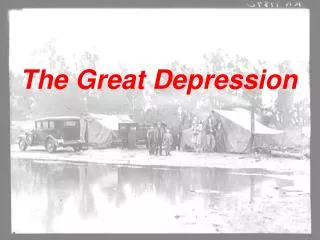
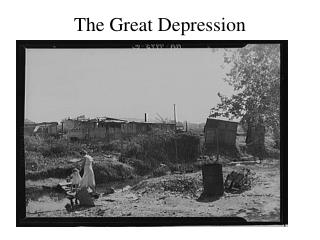
Looking for a Place to Live • Many lost their homes- could not pay rent or mortgage • Some refused to move – landlords needed eviction notices • Bailiffs – court officers that ejected non-paying tenants • People put up shacks on unused or public lands - shantytown
Hoovervilles- people blamed the president for their problems and nicknamed the shantytowns Hobos- many homeless began wandering, slipping into trains and camping near rail stations.
Poverty Devastates Rural America • Commodity Prices Plunge • Crop prices dropped • Drought – lasted for years • Could not pay their debts for equipment and seed • Tenant farmers – working for bigger landowners
The Dust Bowl • Plows uprooted grass – sod houses • Wheat had been planted by settlers • Crop prices fell • Farmers left fields uncultivated • No plants – no water – loose soil • Drought struck in 1932 • Dirt dried to dust • Dust Bowl from Dakotas to Texas – wind blew and covered crops, livestock and houses
Many farms were mortgaged and turned over to banks- bought by big business • Families got in their cars and headed west hoping for work- over 800,000 left MO, AK, OK & TX • “Oakies”
Few Americans Escape Hard Times • In the past economic slump called a panic or crisis – severe words • Hoover thought depression better. • State of mind as well as economic reality. • Eventually depression became Depression.
The Depression Attacks Family Life • Men felt shamed that they could not take care of their families. • Shame, despair, abandonment. • Guilt of those still employed – fear of being unemployed • Birthrates plummeted. Mothers working too. • Kids left on their own. No discipline or education
Minorities Suffer Hardships • 1932 – unemployment among African-Americans around 50% • Last hired – first fired • Relied on family and religion • Withstood better than most • Mexican Americans – discrimination and competition for jobs in CA. • Many whites wanted – repatriation of naturalized Mexicans – many pushed out.