Download
1 / 10
110 likes | 204 Views
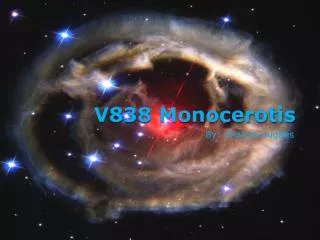
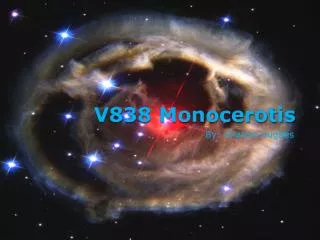
Discovered in 2002 by N. J. Brown, V838 Monocerotis is an intriguing red variable star, 600,000 times brighter than the sun. Best observed in January-March, it's located in the constellation Monoceros, 20,000 light years away, and surrounded by an expanding nebula. Named after the Unicorn constellation, Monocerotis went from under-luminous to a supergiant in months, earning its nomination as one of the Milky Way's most mysterious stars. Explore its light echo and learn more about this enigmatic celestial object at hubblesite.org.

E N D
V838 Monocerotis By: Shanna Hughes
It was found in 2002 by N. J. Brown • It is a red variable star • This star is best viewed in January-March • It is 600,000 times brighter than the sun • It can be called v838 mon for short Facts about V838 Mon(:
video (: Light echo
Facts • My star is located in the constellation Monoceros • It is 20,000 light years away from the earth • It is one of the brightest stars in the galaxy • It is surrounded by a expanding nebula
What is my star named after? • My star happens to be named after the constellation Unicorn. It is named Monocerotis because that’s what the Latin word for unicorn is.
What kind of star is it? • My star is a… Supergiant (:
Interesting fact This star was nominated for the most mysterious star in the milky way! This star has somehow transformed itself in months from being a small under-luminous star to a super giant.
A tour of my star I found this tour at: http://hubblesite.org/gallery/tours/tour-v838/