Download
1 / 4
40 likes | 179 Views
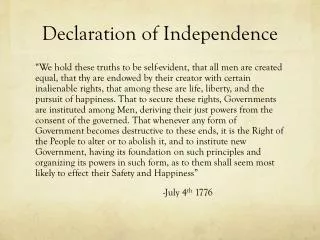
The Declaration of Independence, signed on July 4, 1776, is a pivotal document in American history, authored by Thomas Jefferson. It is grounded in Enlightenment ideas, particularly those of John Locke and Jean-Jacques Rousseau, emphasizing that "all men are created equal" and asserting the rights to "life, liberty, and the pursuit of happiness." The document is divided into three parts: the principles of natural rights, a list of grievances against King George III, and the formal declaration of independence from British rule. It serves as a foundation for American democracy and governance.

E N D
DECLARATION OF INDEPENDENCE Notes written by Thomas Jefferson; signed July 4, 1776 delegates – representatives
I. Ideas for the Declaration of Independence A. Jean Jacques Rousseau 1. “all people are equal” 2. TJ – “all men are created equal” B. John Locke 1. “people have the right to life, liberty, and property 2. TJ- “life, liberty, and pursuit of happiness” 3. *** popular sovereignty – the government gets its power from the consent of the governed (practiced through elections)
II. How is the document divided A. 3 parts 1. Natural rights a. all men equal b. life, liberty, happiness c. popular sovereignty 2. List of grievances (complaint) 3. Declaring of Independence B. This precedes The Revolutionary War (War for Independence)
III. Other significant documents • Iroquois Constitution – founding fathers used parts of this Native American Constitution as a basis for our US Constitution (Ex: Preamble and Bill of Rights) • Articles of Confederation 1. America’s 1st Constitution 2. federal gov’t has little power (WEAK) a. could not tax b. could not enforce federal laws