6 Essential Steps for Successful Role Play in Marketing Strategies and Pricing
Are you ready to enhance your role-playing experience in a marketing context? This guide outlines 6 essential steps to ensure your success, including studying sample tests, mastering marketing terminology, and practicing soft skills such as your ESOMIE pitch. Understand crucial concepts like the product life cycle, pricing strategies (penetration, skimming, discounting), promotion types, and market placement. With these tools, you’ll be well-equipped to engage effectively in role play and apply marketing principles in real scenarios.

6 Essential Steps for Successful Role Play in Marketing Strategies and Pricing
E N D
Presentation Transcript
6 Steps to a successful experience! • Study the sample tests • Look up general marketing terms • Look up trends in your industry • Practice using your soft skills • Practice your ESOMIE pitch over and over! • Know the basics of the 4 P’s(discussed in this presentation)
The least you should know • Soft Skills • What ESOMIE is (Practice your pitch!) • Product benefits and life cycle • Pricing Strategies to use • Promotion Types (advantages of each) • Placement - Intermediaries
The video and slide show that we viewed in class are linked below for reference. https://www.youtube.com/watch?v=wYeXCeBZhjE http://www.slideshare.net/gadekar1986/product-life-cycle-12816142?related=1
After viewing this information, can you explain the stages of the PLC and provide examples if given the diagram below? Give it a shot.
In attempting to explain the stages, you should have said something similar to the items on the next slide. • View the slide to see if you are on track.
Pricing Strategies • Penetration • Skimming • Prestige • EDLP • Discounts • Bundle • Psychographic • Geographic • Cost Plus
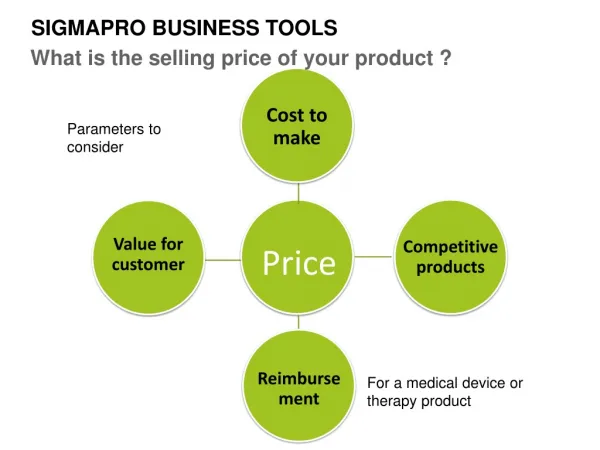
VERY IMPORTANT! • The six steps for determining price are: • Determine pricing objectives • Study (and list) costs • Estimate demand • Study (and list)competition • Decide on a pricing strategy (provide justification) • Set price Setting a Price
Skimming Pricing – Price is set high to capitalize on the high demand during its introductory period, then later lowered as competition catches up and growth starts to flatten. • What product uses a skimming strategy? Pricing Strategies
New Technology • Charge high prices initially because people want to be the first to have the latest technology. • They lower the price to attract more customers when sales start to decline.
Penetration Pricing – Initial price is set low in order to “penetrate” a tough market that is saturated by a lot of competitors with similar products. It can also be used to simply encourage as many people as possible to buy a product. • What product uses a penetration strategy? Pricing Strategies
Razors • Set the razor price very low but the replacement razors are very expensive. • Cable, Mobile/Satellite Radio • Offer a low price for an intro period (usually 3-6 months) then raises the rate significantly.
Prestige Pricing – Prices are always set higher than average to suggest status and an upscale image to the consumer. • What product uses a prestige strategy? Pricing Strategies
Jaguar • Rolex • Gucci • Versace
EDLP – Consistently low prices are set with no intention of ever offering a discount. This pricing strategy is employed when low unit profit margins are expected to be offset by a high sales demand. • What store uses an EDLP strategy? Pricing Strategies
Trader Joes • Wal-Mart • Winn-Dixie • Some item in Macy’s never go on sale because they are EDLP items.
Cost -Plus Pricing – Break-even price is determined then the desired profit is added to arrive at a price. This is used when a bottom line profit margin must be met and the product is predicted to be able to remain in high demand without offering a discount. • What store uses a cost-plus strategy? Pricing Strategies
Note: This strategy ignores what the customer thinks the product is worth. You may be losing out on potential income. • CostCo • Credit Card Readers (RevTrak, Square)
Geographical Pricing - Price adjustments required because of the location of he customer and the associated shipping costs. • This is why things are more expensive in Alaska and Hawaii Pricing Strategies
Psychographic • Segmenting a market (and pricing products) by applying lifestyle and mindset descriptions to different type of people. • Click the link below and fins what group you would be placed in on a company’s psychographic grid • LINK
Discounts • Seasonal Discounts – Discounts are offered to buyers who are willing to buy in advance of the customary buying season. This prevents cash flow problems by keeping a steady stream of revenue coming into a company all year. • Cash Discounts – Buyers who are willing to pay in cash receive a cheaper price. Discount Pricing
Every circumstance is different and the strategy usually fluctuates throughout the life cycle. • Question: How can you get a product back into the growth stage once it reaches the maturity stage? Which Strategy to choose?
Improve the product • Improve the product packaging • Change the size of the product • Find a new use for the product • Bundle the product • Discount the product
Remember these? • The six steps for determining price are: • Determine pricing objectives • Study (and list) costs • Estimate demand • Study (and list)competition • Decide on a pricing strategy (provide justification) • Set price Setting a Price
Be able to justify the price increase to your customers or they will seek other alternatives! Increasing Your Prices
Be able to add • How to make something go Viral • Graphic Design/Movie Creation • CRAP principle, Photoshop/Illustrator techniques • Shark Tank Knowledge • Public Relations • What your committee did this semester • …and you will be able to make a thorough 1st semester review project
Coca – Cola is looking for a new product to jump start their idle sales. Though people their brand very well, they feel they have reached their potential with the Coca Cola soda product. Your mission: Develop a new product for Coca-Cola that old Coca-Cola drinkers will want to try (because they are brand loyal). It’s Your Turn!
A picture of the product (MUST LOOK REALISTIC!) • A name for the product • A tagline for the product • Discuss how you foresee it going through the life cycle. What will occur at each stage? • What will you do to introduce the product? • What will your pricing strategy be? • What will you do when sales start to decline? Include: