Download

1 / 20
200 likes | 325 Views
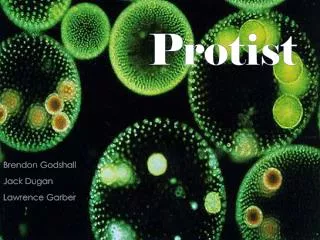
Protists are diverse eukaryotic organisms that thrive in moist environments. They are classified into three main groups: animal-like, plant-like, and fungus-like. Plant-like protists, also known as algae, include unicellular diatoms and dinoflagellates, as well as multicellular red and brown algae. Animal-like protists, or protozoans, are heterotrophic and include amoebas and paramecium. Fungus-like protists reproduce using spores and include slime molds and water molds. This classification highlights the importance of protists in ecological systems and their varied life forms.

E N D
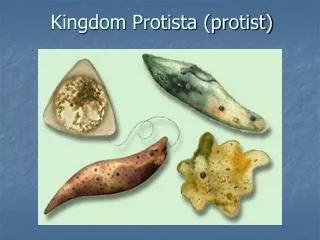
What is a Protist? • Eukaryote • Live in moist environments • 3 types: animal-like, plant-like, fungus-like
Plant-like Protists • Also called algae • Autotrophs • 6 types
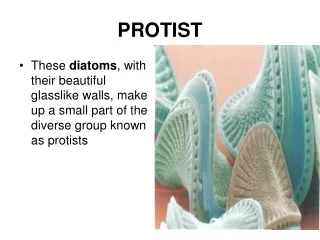
1. Diatoms • Unicellular • Used in furniture polish
2. Dinoflagellates • Unicellular • 2 flagella • Many glow in the dark • Cause of the red tide
3. Euglenoids • Green • Unicellular • Heterotrophs under certain conditions • Example organism: euglena
4. Red Algae • Multicellular • Used in ice cream and hair conditioner (carrageenan)
5. Green Algae • Most are unicellular • Most live in fresh water, some live on land on rocks and tree bark
6. Brown Algae • Commonly called seaweeds • Example organism: kelp
Animal-like Protists • Heterotrophs • Most move • Also called protozoans • Unicellular • Classified into 4 groups based on how they move
1. Pseudopods • Definition: temporary bulges of the cell • Example organism: ameoba
2. Cilia • Definition: hair-like projections from cells that move in a wave-like motion • Example organism: paramecium
3. Flagella • Definition: long whip-like tail used for movement • Example organism: Giardia
4. parasites • Move in a variety of ways • Example organism: Plasmodium
Fungus-like Protist • Heterotrophs • Have cell walls • Use spores to reproduce (spores are tiny cells that can grow into a new organism) • 3 types http://www.youtube.com/watch?v=UvTvaxVySlE