Static Electricity
In this science fair project, Ally Clinard investigates how various materials interact with static electricity. Using a latex balloon, a ski sock, a rug, and her dog, Koda, Ally explores which material generates the most static charge. She hypothesizes that the rug will create the most static electricity, based on her past experiences. The experiment shows surprising results, revealing that her dog produces the strongest static charge, with the balloon sticking to the wall for over twenty minutes. This project highlights the fascinating interactions of everyday materials with static electricity.


Static Electricity
E N D
Presentation Transcript
Static Electricity Science Fair Project by Ally Clinard
BIG QUISTION How do different materials react to static electricity?
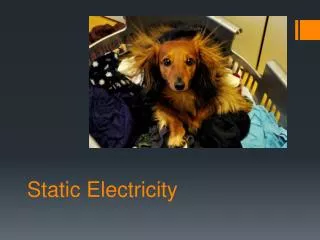
MATERIALS Latex Balloons Ski Sock Rug My Dog, Koda The Wall
HYPOTHESIS I think that the rug will create the most static electricity over the other variables; my dog and a ski sock. I think this because in the winter I am able to shock my brother just by walking on the rug because of the dry air.
DETAILS First, blow up a balloon. It doesn’t matter what kind, but latex works best. Next, get your variables. I used my dog (an Australian Shepherd), a thick ski sock and a rug in my room. Rub the balloon on the first variable. I started with the ski sock. I rubbed the balloon ten times on the sock. Stick the balloon to the wall to see if it sticks. Did it stick? Follow these instructions for the next two variables and record the data.
DATA Ski Sock: The ski sock did not produce as much static electricity for the balloon as I would have thought. After rubbing it ten times it stuck to the wall for only about twenty seconds. My Dog: Surprisingly he produced the most static of all the variables. The balloon was still stuck to my wall even when I went to bed! The Rug: This produced a lot of static, but not quite as much as with my dog. The balloon stayed on my wall for over twenty minutes.
ANALYSIS Yes, the experiment did test my hypothesis. I was surprised to learn that my dog produced the most static. I thought the rug would have the most. I know this because even though I don’t shock myself when I pet my dog, I would never have thought that he would produce the most static.
CONCLUSION My hypothesis was not correct. As I already mentioned, I thought that the rug in my room would produce the most static on the balloon. I would only change the variables of the experiment. Maybe I would try to use some different items in my home, or maybe seeing if the amount of air in the balloon has anything to do with how long it holds the static electricity. One question I did have was how the static allowed the balloon to be suspended on the wall for so long. I also wondered if my dog had been to the groomers, would this have a different affect.