1. What is a Fixed Fire Fighting System and how is it different from portable firefighting equipment?
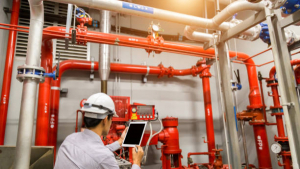
A Fixed Fire Fighting System (FFFS) is a permanently installed fire protection system designed to automatically detect and control fires. These systems are built into a building’s infrastructure and are engineered to respond immediately when a fire breaks out, often without the need for human action. Portable firefighting equipment, such as fire extinguishers and hose reels, works differently. These systems are manually operated and rely on people to identify the fire and respond correctly. While portable systems are useful for small or early-stage fires, fixed systems provide continuous protection and are far more effective in large areas or high-risk environments where quick suppression is critical.
2. What are the main types of Fixed Fire Fighting Systems used in buildings and industries?
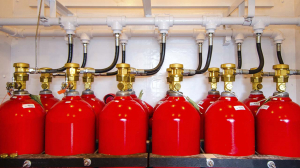
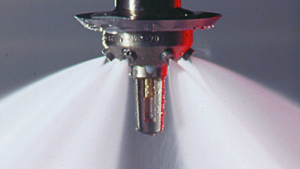
There are several types of Fixed Fire Fighting Systems, each designed for specific fire risks. Sprinkler systems are the most common and release water automatically when exposed to high heat. Deluge systems use open nozzles that discharge water simultaneously and are ideal for high-hazard areas. Foam systems are used where flammable liquids are present, such as fuel storage areas or refineries. Gas suppression systems, including CO₂, FM-200, and Novec 1230, extinguish fires without water and are suitable for data centers and electrical rooms. Water mist systems use fine droplets to cool fires quickly while minimizing water damage.
3. How does a https://swastiksynergy.com/fire-suppression-systems.htmlFixed Fire Fighting System detect and activate during a fire?
These systems work through three main stages: detection, control, and activation. Fire or abnormal heat is detected using smoke, heat, or flame detectors. The signal is then sent to a fire alarm control panel, which confirms the emergency. Once confirmed, the system automatically releases the appropriate firefighting agent—water, foam, or gas—depending on the system type. Manual activation options are also available to ensure safety and reliability in all situations.
4. What standards and design requirements must be followed for Fixed Fire Fighting Systems?
Fixed Fire Fighting Systems must be designed and installed according to international standards such as NFPA, ISO, and BS EN. Key design considerations include proper risk assessment, adequate water or agent supply, correct spacing of detectors and discharge nozzles, and seamless integration with fire alarm and emergency shutdown systems. https://swastiksynergy.com/Swastik Synergy specializes in the design, installation, and maintenance of Fixed Fire Fighting Systems that meet international safety standards.
5. How important is maintenance for a Fixed Fire Fighting System?
Regular inspection, testing, and maintenance are essential to ensure the system functions properly during an actual fire. In addition, the company provides high-quality fire extinguishers for kitchen fires, offering reliable protection against oil and grease fires in commercial kitchens, hotels, and food facilities.
Fixed Fire Fighting System Swastik Synergy Fire Protection

- yashuser
- Jan 30, 2026 ·
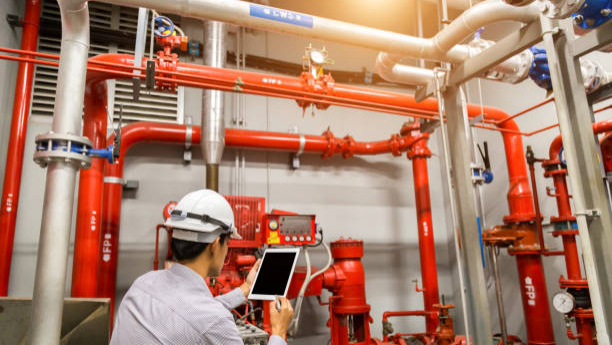
A Fixed Fire Fighting System is vital for buildings as it provides automatic fire detection and suppression, reducing damage and protecting occupants.