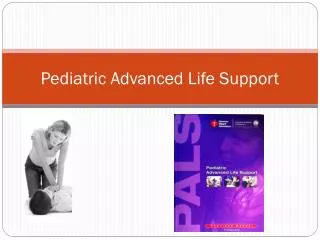
Pediatric Advanced Life Support
770 likes | 1.58k Views
Pediatric Advanced Life Support. Jan Bazner-Chandler CPNP, CNS, MSN, RN. American Heart Association. Pediatric Advanced Life Support Guidelines first published in 1997 Revisions made in 2005 Revisions made in 2010. Students Nurse Concerns.


Pediatric Advanced Life Support
E N D
Presentation Transcript
Pediatric Advanced Life Support Jan Bazner-Chandler CPNP, CNS, MSN, RN
American Heart Association • Pediatric Advanced Life Support • Guidelines first published in 1997 • Revisions made in 2005 • Revisions made in 2010
Students Nurse Concerns • You will need to learn the basics as outlined in the PALS 2010 Guidelines • American Heart Association guidelines are expected standards of a practicing pediatric nurse. • You will need to know basic CPR guidelines and have a current CPR card prior to starting the clinical rotation.
ABC or CAB • 2010 AHA for CPR recommend a CAB sequence • Chest compression • Airway • Breathing • Ventilation • Critical thinking: WHY?
CAB Guidelines • Infant BSL guidelines apply to infants < approximately one year of age. • Child BSL guidelines apply to children > 1 year until puberty (breast development in girls and axillary hair in males) • Adult BSL for puberty and above.
Chest compression • Rate of 100 compression per minute • Push hard: sufficient force to depress at least one third the anterior-posterior diameter of the chest. • 1 ½ inches in infants • 2 inches in children • Allow chest recoil after each compression to allow the heart to refill with blood
Hand placement • Infant: compress the sternum with 2 fingers placed just below the inter-mammary line • Child: compress the lower half of the sternum at least one third of the AP diameter of the chest (2 inches) with one or two hands • Note: do not compress over the xiphoid or ribs
Ventilation / Compression • One rescuer: 30 compression to 2 ventilation • After initial 30 compression, open airway using a head tilt-chin lift and give 2 breaths using mouth-to-mouth-and nose. • Note: if you use mouth to mouth, pinch off the nose. • Continue for approximately 2 minutes (about 5 cycles) before calling for ERS and AED.
CABS Sequence • Assess need for CPR • If health care provider take 10 seconds to check for pulse • Brachial in infant • Carotid or femoral in a child • “ARE YOU OKAY?”
Breathing child • If child is breathing, put in recovery position, call emergency response system, return quickly and re-assess child’s condition • Turn child on-side (recovery position)
Inadequate Breathing With Pulse • If pulse > 60 per minutes but there is inadequate breathing give rescue breathing at a rate of about 12 to 20 breathes per minute. • Reassess pulse about every 2 minutes • Carotid or femoral for child • Brachial for infant
Unresponsive and not breathing • If the child is unresponsive and not breathing (or only gasping) begin CPR. • Start with high-quality chest compression. (30 chest compressions) • After one cycle 2 minutes check for pulses • Call for help when able
Bradycardia with Poor Perfusion • If pulse is less than 60 per minutes and there are signs of poor perfusion • Pallor • Mottling • cyanosis • despite support of oxygenation and ventilation – start CHEST COMPRESSION
Defibrillation • “Children with sudden witnessed collapse (eg, a child collapsing during an athletic event) are likely to VF or pulseless VT and need immediate CPR and rapid defibrillation. “ • VF and pulseless VT are referred to as “shockable rhythms” because they respond to electric shocks. • VT – ventricular tachycardia • VF – ventricular fibrillation
Defibrillation Dosing • The recommended first energy dose for defibrillation is 2 J/kg. • If second dose is required, it should be doubled to 4 J/kg. • AED with pediatric attenuator is preferred for children < 8 years of age.
Defibrillation Sequence • Turn AED on • Follow the AED prompts • End CPR cycle (for analysis and shock) • Resume chest compressions immediately after the shock. • Minimize interruptions in chest compressions. • State CLEAR when giving the shock and have visual / verbal communication with any other rescue personal
Asphyxial Cardiac Arrest • Cardiac arrest caused by asphyxiation (lack of oxygen in blood) • Carbon dioxide accumulates in the lungs while oxygen in the lungs is depleted resulting in cardiac arrest. • Causes: drowning, choking, airway obstruction, sepsis, shock
Asphyxial Cardiac Arrest • “One large pediatric study demonstrated that CPR with chest compression and mouth-to-mouth rescue breathing is more effective than compression alone when the arrest was from a noncardiac etiology.” • “Ventilations are more important during resuscitation from asphysia-induced arrest, than during resuscitation from VF or pulseless VT.”
Foreign-body Airway Obstruction • 90% of childhood deaths from foreign body aspiration occur in children < 5 years of age; 65% are infants. • Balloons, small objects, foods (hot dogs, round candies, nuts and grapes) are the most common causes of foreign-body airway obstruction
FBAO • If FBAO is mild, do not interfere. • Allow the victim to clear the airway by coughing. • If the FBAO is severe (victim unable to make a sound) you must act the relieve the obstruction.
FBAO • For a child perform subdiaphragmatic abdominal thrusts until the object is expelled or the victim becomes unresponsive. • For an infant, deliver repeated cycles of 5 back blows followed by 5 chest compressions until the object is expelled or the victim becomes unresponsive.
FBAO – unresponsive • Start Chest Compression • After 30 chest compressions open airway • If you see a foreign body remove it • DO NOT perform a blind finger sweep • Give 2 breaths • Followed by 30 chest compressions
Drowning • Outcomes after drowning is determined by the duration of submersion, the water temperature, and how promptly and effectively CPR is provided.
Pediatric Advanced Life Support • Timely intervention in seriously ill or injured children is the key to preventing progression toward cardiac arrest and to saving lives.
Pediatric Cardiac Arrest • Pediatric cardiopulmonary arrest results when respiratory failure or shock is not identified and treated in the early stages. • Early recognition and intervention prevents deterioration to cardiopulmonary arrest and probable death.
Cardiac Arrest • Pediatric cardiac arrest is: • Uncommon • Rarely sudden cardiac arrest caused by primary cardiac arrhythmias. • Most often asphyxial, resulting from the progression of respiratory failure or shock or both.
Respiratory Failure • A respiratory rate of less than 10 or greater than 60 is an ominous sign of impending respiratory failure in children.
Breathing • Breathing is assessed to determine the child’s ability to oxygenate. • Assessment: • Respiratory rate • Respiratory effort • Breath sounds • Skin color
Airway • Airway must be clear and patent for successful ventilation. • Position • Suction • Administration of oxygen • Bag-mask ventilation • Note: suctioning is helpful if secretions, blood or debris is present. Use with caution if upper airway swelling is edema (eg. croup, epiglottitis)
Endotracheal Tube Intubation • New guidelines: • Secondary confirmation of tracheal tube placement. • Use of end-tidal carbon dioxide monitor or colorimetric device
Circulation • Circulation reflects perfusion. • Shock is a physiologic state where delivery of oxygen and substrates are inadequate to meet tissue metabolic needs.
Circulation Assessment • Heart rate (most accurate assessment) • Blood pressure • End organ profusion • Urine output (1-2 mL / kg / hour) • Muscle tone • Level of consciousness
Circulatory Assessment • Heart rateis the most sensitive parameter for determining perfusion and oxygenation in children. • Heart rate needs to be at least 60 beats per minute to provide adequate perfusion. • Heart rate greater than 140 beats per minute at rest needs to be evaluated.
Blood Pressure • 25% of blood volume must be lost before a drop in blood pressure occurs. • Minimal changes in blood pressure in children may indicate shock.
Blood Pressure Guidelines • Hypotension is defined as systolic blood pressure • Neonates: < 60 mm Hg • Infants: <70 mm Hg • Child (1 to 10): < 70 mm Hg • Child (>10): < 90 mm Hg
Vascular Access – New Guidelines • New guidelines: in children who are six years or younger after 90 seconds or 3 attempts at peripheral intravenous access – Intraosseous vascular access in the proximal tibia or distal femur should be initiated.
IV Solutions • Crystalloid solution for fluid loss (hypovolemia) • Normal saline 20ml/kg bolus over 20 minutes • Ringers Lactate Blood loss: Colloid: 5% albumin Blood Fresh-frozen plasma
Gastric Decompression • Gastric decompression with a nasogastric or oral gastric tube is necessary to ensure maximum ventilation. • Air trapped in stomach can put pressure on the diaphragm impeding adequate ventilation. • Undigested food can lead to aspiration.
Arrhythmias • Bradycardia with pulse • Tachycardia with pulses and adequate perfusion • Pulseless arrest • VF/VT • Asystole
Bradycardia • The most common dysrhythmia in the pediatric population. • Etiology is usually hypoxemia • Initial management: ventilation and oxygenation. • If this does not work IV or IO epinephrine 0.01 mg / kg (1:10,000) • ET tube (not recommended) 0.1 mg / kg Search for and treat possible contributing factors
Tachycardia with pulses • Supraventricular tachycardia • History: vague, non-specific, history of abrupt rate change • P waves absent or normal • HR not variable with activity • Infants: rate > 220/min • Children: rate > 180/min
Management • Consider vagal maneuvers • Establish vascular access • Adenosine • First dose 0.1 mg/kg IV (maximum of 6 mg) • Second dose 0.2 mg/kg IV (maximum of 12 mg) • Synchronized cardioversion: 0.5 to 1 J / kg • Critical thinking: what is a vagal maneuver?
Pulseless Arrest • Ventricular fibrillation / ventricular tachycardia • Asystole