Download

1 / 12
120 likes | 248 Views
The Mid-Ocean Ridge, the world's longest mountain chain stretching 50,000 km, mainly submerged underwater, plays a crucial role in shaping oceanic crust. Harry Hess proposed in 1960 that the ocean floor acts like conveyor belts, transporting continents as molten material from the mantle erupts at the ridge. This process, known as sea-floor spreading, continually adds new material to the ocean floor, supported by evidence like pillow-shaped rocks, magnetic stripes, and drilling samples. Subduction at deep-ocean trenches further explains ocean floor expansion and recycling back into the mantle.

E N D
Sea Floor Spreading p. 331-337
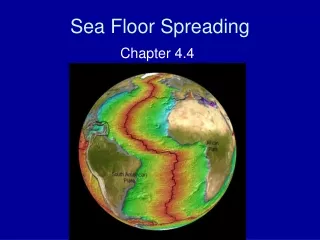
Mid-Ocean Ridge • Longest chain of mountains in the world (50,000 km long!) • Mostly underwater • Iceland part of Mid-Ocean Ridge • We use sonar to map the ocean floor
How was the Ridge Made? • Harry Hess, studied the mid-ocean ridge • 1960 he suggested ocean floor like conveyor belts, carrying continents with them • Movement begins at mid-ocean ridge
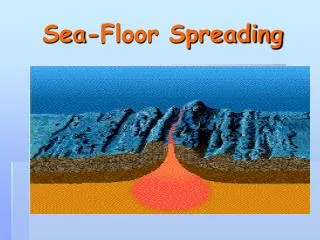
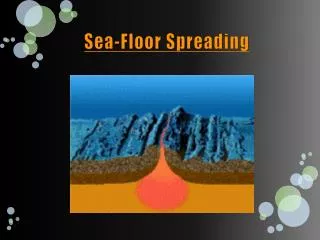
At the mid-ocean ridge, molten material rises from the mantle and erupts. The molten material then spreads out, pushing older rock to both sides of the ridge. What Happens?
Sea-Floor Spreading • Sea-floor spreading: the process that continually adds new material to the ocean floor. • Evidence for Sea-floor spreading: • Molten material • Magnetic stripes • Drilling samples
Evidence: Molten Material • Rocks shaped like pillows found – only forms when molten material hardens quickly Scientists inside Alvin 4 km deep
Evidence: Magnetic Stripes • Magnetic field around Earth • Poles have reversed themselves (last time 780,000 years ago) • Magnetized “stripes” on ocean floor hold record of reversed poles
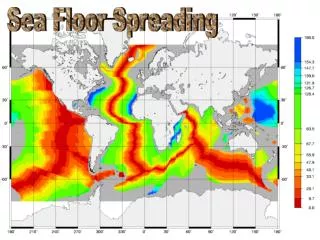
Evidence: Drilling Samples • Rocks drilled from ocean floor • Age of rocks determined • Further away from ridge, older the rock • Youngest rock found in the center of the ridge
Subduction at Deep-Ocean Trenches • How can the ocean floor keep getting wider and wider? • Floor plunges into deep underwater canyons called deep-ocean trenches • These occur where oceanic crust bends downward
Subduction is the process by which the ocean floor sinks beneath a deep-ocean trench and back into the mantle.