Download
1 / 7
70 likes | 185 Views
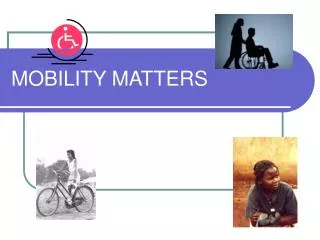
Mobility is critical for disabled individuals, affecting their education, healthcare access, community involvement, and employment opportunities. The cycle of poverty and disability often leads to social exclusion, making it essential to advocate for the rights and needs of people with disabilities. The UK’s Dfid paper highlights this vicious cycle, emphasizing the importance of a rights-based approach to mobility. With the UN Convention promising affordable access to mobility devices and training, the call for effective measures is urgent. It is time to shift perspectives and empower disabled individuals to declare, “I CAN.”

E N D
Disabled people – the poorest of the poor MOBILITY MEANS • Education • Access to healthcare • Community involvement • Employment opportunities • Information and awareness • “I CAN”, rather than “I CAN’T” • Accessing your rights
SOCIETY Social exclusion - Lack of access poverty disability
THE DEVELOPMENT AGENDA Dfid’s paper “Disability, Poverty and Development” (2000): • Rights and needs of people with disabilities must be taken into account • Poor people with disabilities are caught in a vicious cycle of poverty and disability • Poverty and disability: cause and consequence
MAINSTREAMING DISABILITY HAS HAD THE FOLLOWING RESULTS • Less funding for “service provision” • Mobility projects seen as unsustainable • Fewer, not more opportunities for disabled people • Greater exclusion
MOBILITY MATTERS • As a prerequisite • As part of a rights-based approach • As a tool of empowerment • Project funding needs rethinking
THE FUTURE? Article 20 of the UN Convention promises • To facilitate mobility • At affordable cost • Access to mobility devices • Training in mobility skills • States parties shall take effective measures …………..SOON?