Understanding the Core-Periphery Model in Global Economics and Political Power Dynamics
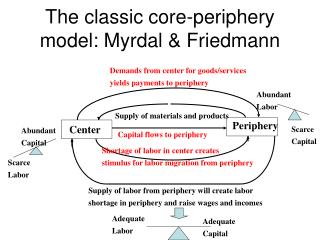
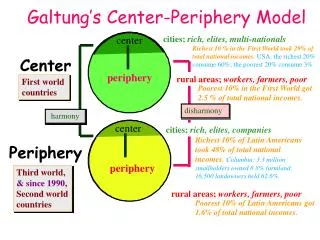
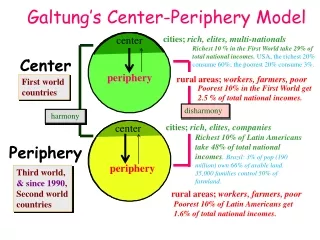
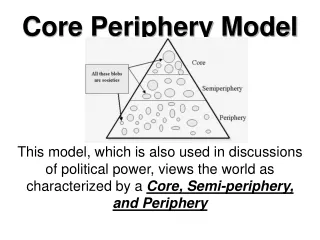
The Core-Periphery Model serves as a framework for analyzing global economic and political power. It divides the world into three regions: Core, Semi-periphery, and Periphery. Core regions are characterized by high socioeconomic prosperity and dominance in the global arena. In contrast, Periphery regions are less developed and dependent on the Core, lacking significant control over their own affairs. Semi-periphery regions fall in between, possessing more power than Periphery regions but still being influenced by the Core. This model helps to illustrate the complexities of global inequalities.

Understanding the Core-Periphery Model in Global Economics and Political Power Dynamics
E N D
Presentation Transcript
Core Periphery Model This model, which is also used in discussions of political power, views the world as characterized by a Core, Semi-periphery, and Periphery
Core Regions • Those that have achieved high levels of socioeconomic prosperity and are dominant players in the global economic game.
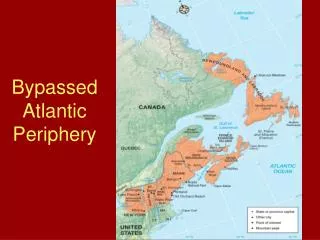
Periphery Regions • Poor regions that are dependent in significant ways on the core and do not have as much control over their own affairs.
Semi-Periphery • Consists of regions that exert more power than peripheral regions but are dominated to some degree by the core regions.