Download

1 / 5
50 likes | 181 Views
The Romantic Period (1798-1832) witnessed significant social and cultural changes amidst the Industrial Revolution. Key events include the Peterloo Massacre in 1819, highlighting workers’ struggles against long hours and low wages. The era saw the establishment of the London Metropolitan Police in 1829 and the introduction of omnibuses in 1835, addressing urban congestion. Notable discoveries included Jenner's smallpox vaccine and advancements in railway construction. The Romantic literary movement emphasized emotion, imagination, and individualism, inspiring art and fashion shifts during this transformative time.

E N D
The romantic period 1798-1832
ENGLISH LIFE • 1819—Peterloo Massacre • Demonstration that occurred during the Industrial Revolution that protested worker’s long hours, harsh treatment, and low wages • Increase in crime • 1829—London Metropolitan Police • 1835—Omnibuses • Due to industrialization, cities were becoming heavily populated creating traffic problems • Horse drawn carriages • Discoveries • Edward Jenner develops successful smallpox vaccine • Coal is used to produce fuel gas • Railway construction
FOOD/FASHION • 1811—began canning meat • Women abandoned tight bodices/corsets in favor of high-wasted, low cut dresses
ARTS/ENTERTAINMENT • Fairs widely attended • Philharmonic Society was formed
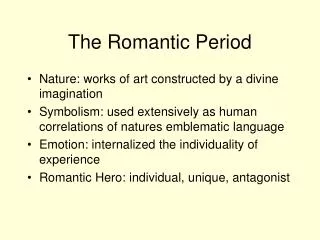
LITERARY TREND • Romanticism • Emotion favored over reason • Individual valued over society • Imagination over logic • Natural over artificial • Found inspiration in nature, folk art, the past, passions