An Interview with Eugene Moss Jr.: A Journey Through History and Science
In this enlightening interview, Eugene Moss Jr. shares his remarkable life story, from his childhood in East Orange, New Jersey, to serving in WWII and the Korean Conflict. With roots from immigrant parents, Eugene's journey through education at Lincoln University and his groundbreaking career as a researcher at Schering-Plough highlights the struggles and triumphs of being a Black scientist during his time. He reflects on the changing landscape of science, the importance of diversity, and his pride in the advancements of fellow Black scientists.

An Interview with Eugene Moss Jr.: A Journey Through History and Science
E N D
Presentation Transcript
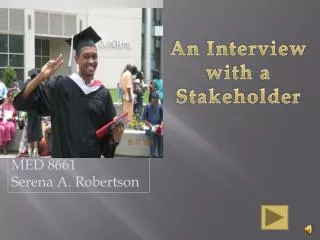
An Interview with Eugene Moss Jr. By Jordan J. Lassiter
Interview with Eugene Moss Jr. • Born: August 1927 in East Orange, New Jersey • Was one of four children • Served in WWII and Korean Conflict • Son of immigrant parents • True Blue and Crooked Island, Bahamas • Father was a carpenter and fisherman. • Moved to OpaLocka, Florida (Outside of Miami) where his parents married
Childhood • Grandpa would go to Upsala College to fly kites as a child • Father would always have him doing chores • Bought 1929 Ford for 25 dollars • Father tried really hard to keep kids out of trouble especially during the summer
Continued… • Through grade school- Grandpa did not experience much racism and excelled in his studies • However, when walking around his neighborhood his brother and he would choose the “right streets” to walk down, especially during Halloween
Military Experience • Was classified as 1A • During weekends in High School, he worked at medical lab in Newark analyzing cultures in a Bacteriology lab. • Was sent to the medical corps in Texas and was the only black person that went to the medical tech training. • WWII ended and he was honorably discharged
College • With the GI Bill Grandpa perused a degree at Lincoln University in 1947 • Many of his classmates were from New Jersey and were taught by mainly white professors • Joined Kappa Alpha Psi • Father was very against education
THE KOREAN WAR (1950’s) • Received a letter stating that he needed to serve another 10 months in the military • Completed basic training again, and was very nervous he would be sent to the battle front • Stationed in Germany • Encountered a new form of racism • Joined military track team (traveled throughout Europe) • Worked in and out of hospitals • Was the only black person to be doing this at the time in the bacteriological phase. • Given graduate credit.
Interest in Research • High School jobs at both the bacteriology lab and pharmacy • Military experience • In the military expanded him • Worked with diseases, bacteria and fungus with the diseases/ bacteria and fungus • Patients! • Bacteriological phases in all kinds of projects. • CDC and Doctors. • After Korean Conflict went to graduate school
Career • Schering-Plough researcher • Schering-Plough manufactured several pharmaceutical drugs best known for the allergy drug Claritin, and an anti-cholesterol drug called Vytorin among others • Working with one phase of a chemists work and expanded it to create a more in depth analysis • Was the only black researcher until the end of his career • International meetings
How the field has changed? • COMPUTERS! • “It is nice to see other black scientist, and that they are in programs. I am very proud of what they are doing and the dignity they take in their work.”