Understanding Recursive Functions and Palindrome Checks in Programming
This resource offers insights into recursive programming techniques used to solve problems, such as palindrome validation and summing arrays using divide-and-conquer methods. Various examples illustrate how recursion works, including tracing palindromes with sample inputs, summing array elements, and counting odd numbers in a list. The document also explains memory allocation for 2D arrays and how to initialize and manipulate data using recursive functions effectively. Perfect for beginners looking to deepen their understanding of recursion.

Understanding Recursive Functions and Palindrome Checks in Programming
E N D
Presentation Transcript
Exercise 2 CS 110 Sum 09
what (104,16) X=104 y=16 X=88 y=16 X=72 y=16 X=56 y=16 X=40 y=16 X=24 y=16 X=8 y=16 X=8 y=8
what (15,35) X=15 y=35 X=15 y=20 X=15 y=5 X=10 y=5 X=5 y=5
what (63,18) X=63 y=18 X=45 y=18 X=27 y=18 X=9 y=18 X=9 y=9
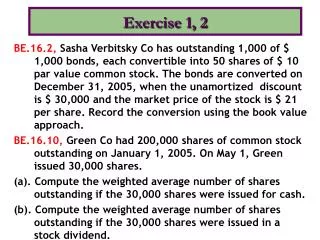
Palindrome bool palindrome(string s, int first, int last) { if(first>=last) return true; else if(s[first] != s[last]) return false; else return palindrome(s, first+1, last-1); }
Tracing Palindrome “dad” and “daa” “dad” “dabd” true false F=0, L=2 F=0, L=3 true false F=1, L=2 F=1, L=1
n = process (a , 12 , 10 ); 05 3 0 17 10 9 20 0 1 2 3 710 1+ n=12, x=10 A[10] = 0 n = 4 1+ 1+ X=9 A[9] = 0 + X=11 A[11] = 0 0 0 0 + 1+ + X=8 A[8] = 0 X=10 X=10 X=12 0 0 X=7 X=9
long int z = Func( 5 , 3 ); z=10 n=5, m=3 6 4 n=4, m=3 + n=4, m=2 3 3 3 + 1 + n=3, m=3 n=3, m=2 n=3, m=2 n=3, m=1 1 1 1 2 2 + + 2 + n=2, m=2 n=2, m=1 n=2, m=2 n=2, m=1 n=2, m=1 n=2, m=0 1 1 1 + 1 1 1 + + 1,1 1,0 1,1 1,0 1,1 1,0
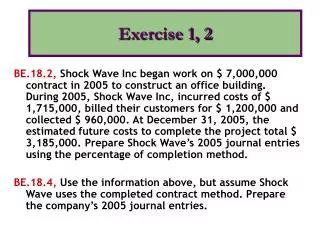
sum (Divide & Conquer) int sum( int a[ ], int s, int e) { if ( s > e ) return 0; else if ( s == e ) return a [ s ]; else { int m = ( s + e ) / 2; return sum ( a, s, m ) + sum ( a, m+1, e ); } }
sum (Divide & Conquer) 29 s=0, e=6 M=3 14 15 s=0, e=3 M=1 + s=4, e=6 M=5 9 12 A[6] + 6 + s=0, e=1 M=0 s=2, e=3 M=2 s=4, e=5 M=4 s=6, e=6 A[0] A[4] A[1] A[2] A[3] + + + A[5] s=0,e=0 s=1,e=1 s=2,e=2 s=3,e=3 s=4,e=4 s=5,e=5
oddcount int oddcount(int A[ ], int s, int e) { if (s > e) return 0; else if ( A[s]%2 ) return 1 + oddcount (A, s+1, e); else return oddcount (A, s+1, e); }
asciisum (Blanks included) int asciisum (string s, int first, int last) { if( first > last) return 0; return int ( s [first] ) + asciisum (s, first + 1, last); }
asciisum (Blanksexcluded) int asciisum (string s, int first, int last) { if( first > last) return 0; if( s[first] == ‘ ‘) return asciisum (s, first + 1, last); return int ( s [first] ) + asciisum (s, first + 1, last); }
Assignment 3 • int map ( int i, int j ) { return i * M + j; } • void zeros ( int * count ); • void zeros ( int * & count ); // if allocate memory inside zeros • void move ( int & ibug, int & jbug, int imove[ ], int jmove[ ] ) • bool inside ( int i, int j ); • void display ( int * count, int total ) • bool done ( int * count );
Assignment 3 //in main function //Initialize int imove[9]={0,-1,0,1,1,1,0,-1,-1}; int jmove[9]={0,1,1,1,0,-1,-1,-1,0}; int sum=0;
Assignment 3 //should be entered by user or randomly generated with validation int ibug=10; int jbug=12; M = 15; N = 15;
Assignment 3 srand ((unsigned) time (NULL)); // Memory allocation int * count = new int [ M * N ]; //initial bug location count[map(ibug, jbug)] = 1;
Assignment 3 Loop incrementing sum (total) call move function to move the bug increment array at that location until done call display function Free memory //delete [ ] count;