Endocrine system
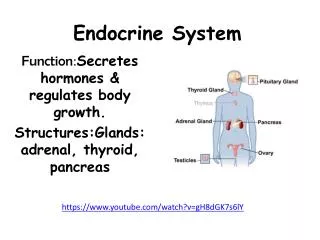
The human endocrine system comprises various glands that produce and secrete hormones directly into the bloodstream. These hormones act as chemical messengers, targeting specific organs through hormone-receptor protein binding. Key glands include the pituitary, thyroid, parathyroid, adrenal glands, pancreas, ovaries, and testes, each of which has distinct functions. Unlike exocrine glands, which have ducts, endocrine glands seamlessly release their products into the body. Homeostasis is maintained via feedback mechanisms, including negative and positive feedback systems.

Endocrine system
E N D
Presentation Transcript
Endocrine system Human Systems Biology
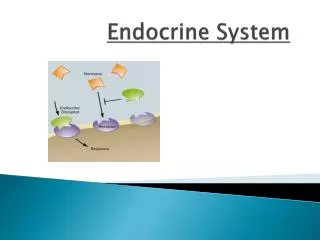
Hormones “Chemical Messengers” • Produced and secreted directly into the blood by endocrine glands • Endocrine gland hormones are spread by blood stream throughout body to target organs (each hormone has a specific target) • Target organs have hormone-receptor proteins that bind to hormones that arrive in blood • Neurotransmitters are different because they send signals between cells
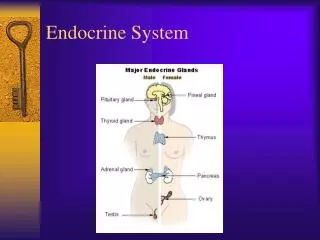
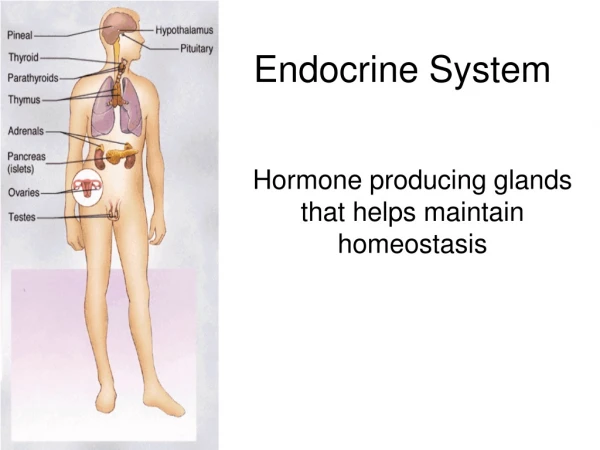
Page 65 • The main glands in the Endocrine system are: • Pituitary Gland • Thyroid Gland • Parathyroid Glands • Adrenal Glands • Pancreas • Ovaries • Testes Refer to page 65, write a brief function for each gland!
Types of Glands Exocrine Glands Endocrine Glands • Have ducts • Secrete products into body cavities • E.g. salivary glands secrete salivary amylase enzyme into mouth via salivary ducts • No ducts! • Secrete hormones directly into bloodstream • E.g. • Hypothalamus • pituitary • thyroid • pancreas
Salivary Gland Duct
Control of Endocrine Glands Endocrine glands are controlled by a “cause and effect” feedback system with inputs (reactants) and outputs (products). This is what maintains “Homeostasis” (balance) Negative Feedback Positive Feedback • If the feed back output opposes the input • Pancreas: See page 66 about blood glucose. • Kidney: See page 64 about ADH. • If the output (i.e. hormone) fed back is increasing the input