Pacific Threadfin
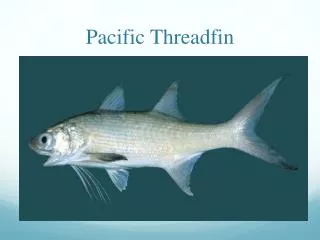
The Pacific Threadfin, commonly known as Moi or Six Finger Threadfin, is celebrated for its exquisite taste and versatile preparation methods. Originally raised through ancient Hawaiian aquaculture methods called Lokoi’a, modern practices have significantly evolved, with over 70% of caught specimens now coming from aquaculture. This fish is exclusively cultivated in Hawaii and efficiently shipped to markets worldwide. With optimal growth periods and high survival rates in recirculating systems, it represents a sustainable choice in fisheries that continue to thrive despite challenges like power outages and cannibalism.

Pacific Threadfin
E N D
Presentation Transcript
Polydactylussexfilis • Commonly known as Pacific Threadfin or Six Finger Threadfin • Also known by the common name moi, or the “fish of kings” • Fingerlings from aquaculture have been used to replenish depleted fisheries, now over 70% of all specimens caught were raised in aquaculture facilities • Modern aquaculture pioneered by Oceanic Institute in Waimanolo, HI
Marketplace • $4-$7/lbs. • 1.3-1.5 FCR • $2.50-$4.25 production cost/lbs. • Still exclusively grown in Hawaii, but shipped to markets on the mainland, Asia, and Europe • Highly popular fish due to its taste and ability to be prepared essentially any way
Lokoi’a • Ancient form of aquaculture used in Hawaii • Walled ponds built along the coast to trap and raise fish • At low tide nutrient-rich water drained from the pond and attracted additional fish to be trapped • So efficient that one pond could feed an entire community • Still utilized today by placing stock inside PVC cages within the original lokoi’a
Reproduction • Protandrous hermaphrodites • Spawn for 3-6 nights 8-10 days after the full moon, year round in optimal conditions, with highest egg viability in the summer months • By dawn viable eggs reach the embryo stage • Known as prolarvauntil D3 when feeding begins, then postlarva until metamorphosis to juvenile form at D21-D25
Current Aquaculture • 6-8 month grow-out period, >90% survival rate • Eggs are hatched and raised in recirculating aquaculture systems for the first 25 days • Moved to nursery tanks with a strong circular current and continuous feeding to prevent cannibalism until moving to grow-out at D60 • Grow-out techniques include: lokoi’a, intensive round tank (RAS), off-shore cages, and raceways
Requirments • Larvae eat algae paste, rotifers, and Artemiasp. napuliibefore weaning to a dry diet • Dry diet needs 50% protein and 12% lipid content • Broodstock are fed a diet of frozen squid, smelt, and shrimp • DO: >5ppm • Salinity: >20ppt, preferable 33-36ppt • Temperature: 24-30°C
Problems • Power outages cause population crashes in hatcheries and nurseries • Back up generators required, especially during peak spawning season • High losses due to cannibalism immediately after metamorphosis • Keeping nursery tanks shallow and a circular current moving prevents food stratification, which eliminates the size differential that prompts the cannibalism