Download

1 / 9
0 likes | 4 Views
Natural remedies are gaining popularity, but effectiveness is key. This presentation addresses the question, 'Can you use coconut oil for teeth whitening?' by exploring the science behind oil pulling and its effects on dental stains and oral health. It also discusses safety tips, limitations, and comparisons with professional treatments. Watch this presentation to find out if you can use Coconut Oil for Teeth Whitening and whether itu2019s a safe and reliable method.Learn more - https://woodbinefamilydental.com/blog/can-you-use-coconut-oil-for-teeth-whitening/

E N D
Coconut oil pulling is an ancient Ayurvedic dental technique that originated in India thousands of years ago. This traditional practice involves swishing oil in your mouth to remove bacteria and promote oral hygiene. The practice has been used for centuries before modern toothpaste and has recently gained popularity in Western cultures as a natural alternative to commercial oral care products. Traditionally, sesame or sunflower oils were used, but coconut oil has become preferred due to its pleasant taste and additional antimicrobial properties.
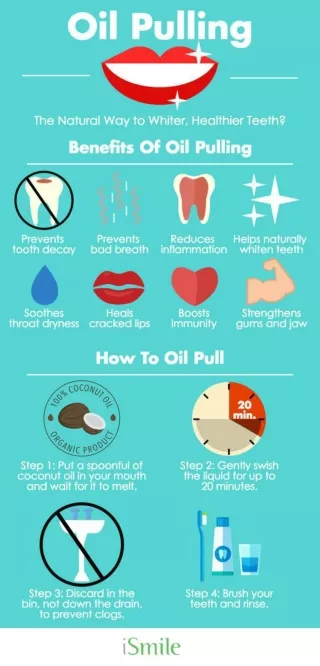
How Coconut Oil Pulling is Performed Step 3: Disposal Step 2: Swishing Spit the oil into a bin or tissue, never down the sink as it can solidify and cause plumbing issues. Rinse thoroughly with warm water and brush as normal. Step 1: Preparation Gently push and pull the oil through your teeth, ensuring it reaches all areas of your mouth. Continue for 5-20 minutes until the oil becomes thin and milky. Take one tablespoon (about 15ml) of virgin coconut oil. If solid, allow it to melt in your mouth before swishing.
Claimed Benefits Beyond Whitening 1 2 Reduces Harmful Bacteria Improves Gum Health Coconut oil contains lauric acid, which has antimicrobial properties that may help reduce the bacterial load in your mouth, potentially decreasing plaque formation and tooth decay. Regular oil pulling may reduce inflammation and bleeding of gums. Some research suggests it could help with gingivitis by decreasing plaque-induced gum inflammation. 3 4 Freshens Breath Soothes Oral Tissues By removing bacteria that cause bad breath (halitosis), oil pulling may serve as a natural breath freshener. The antibacterial properties help eliminate odour-causing compounds. The moisturising effect of coconut oil may help with dry mouth conditions and soothe chapped lips, providing relief for those with xerostomia or related discomfort.
How It Compares: Coconut Oil vs. Whitening Mouthwash Time to Results Effectiveness Side Effects Coconut Oil: Minimal results after 2-4 weeks of daily use Coconut Oil: 1-2 shades lighter with consistent use Coconut Oil: Minimal sensitivity, rare allergic reactions Whitening Mouthwash: Visible results within 1-2 weeks of regular use Whitening Mouthwash: 2-3 shades lighter with 1.5% hydrogen peroxide Whitening Mouthwash: Temporary sensitivity, potential gum irritation
Professional and Expert Opinions "While oil pulling may offer some benefits for oral hygiene, there's insufficient evidence to recommend it as a primary whitening method. We prefer evidence-based approaches with predictable results." — British Dental Association representative Most dental professionals acknowledge that while oil pulling is unlikely to cause harm when done correctly, they hesitate to endorse it as a whitening solution due to: • Lack of standardised protocols • Insufficient clinical research • Availability of more effective alternatives
Practical Guidance: If You Want to Try Choose the Right Oil Time It Right Safety Precautions Use organic, cold-pressed virgin coconut oil. Avoid refined oils or those with additives. Morning on an empty stomach is ideal. Start with 5 minutes and gradually increase to 20 minutes maximum. Never swallow the oil after pulling as it contains bacteria and toxins. Spit into a bin or tissue, not the sink, to prevent plumbing issues. Store properly in a cool, dry place to prevent rancidity which could introduce harmful compounds. Consistency is key—daily practice will yield better results than occasional use. Stop immediately if you experience any discomfort or allergic reaction.
Conclusion: Should You Use Coconut Oil for Whitening? The Verdict Coconut oil pulling may offer modest whitening benefits when used consistently, but shouldn't be expected to produce dramatic results. It's best viewed as a complementary practice that may contribute to overall oral health rather than a primary whitening solution. Recommendations • Consult your dentist before starting oil pulling • Set realistic expectations about whitening results • Consider combining with professional advice for optimal oral health • Use as part of a comprehensive oral hygiene routine
Reach Us At Woodbine Family Dental 500 Rexdale Blvd, Etobicoke, ON, M9W 6K5, Canada 416-675-0422 info@woodbinefamilydental.com woodbinefamilydental.com