Download
1 / 13
130 likes | 258 Views
This study explores the integration of self-access learning with the curriculum for non-English majors at Sojo and Bunkyo universities. Over three classroom hours per week, students with varying levels of motivation engage in self-access and autonomous learning through structured activities. These activities, conducted in self-access centers either individually or in groups, offer students the freedom of choice while meeting institutional goals. The results indicate increased motivation, higher user numbers in self-access resources, and greater awareness of advising services, ultimately fostering a culture of language learning and autonomy.

E N D
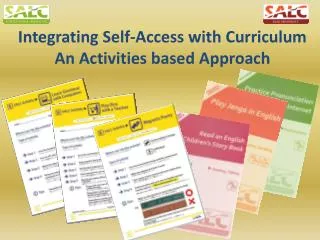
Integrating Self-Access with Curriculum An Activities based Approach
Sojo & Bunkyo students: • Non English majors. • 3 classroom hours per week. • Varying levels of motivation and proficiency. • Self-Access and Autonomous Learning radically different from their previous experience of learning.
What are SALC Activities? • ShortDuration • Done in the Self-access center. • Doneoutside of class time. • Doneindividuallyoringroups.
Why SALC Activities? • Ease students (via heavy scaffolding) into a self-access environment. • Supported by and integratedinto the curriculum. • Satisfy institutional demands. (bums on seats)
Are SALC Activities Commensurate with Autonomous Principles? SOJO • Voluntary. • Choice of activities. • Range of activity types. • Advanced (2nd year) activities require more reflection. BUNKYO • Minimum number compulsory. • Choice of activities. • Range of activity types. • Four stages of activity.
4,416 Activities Completed in Sem 1, 201171% of students completed 4 or more activities
SALC Activities are Increasing Student Motivation to use the SALC
SALC Activities are Raising Awareness of our Advising Service BECC Advising Sessions by Topic 2011
Conclusion • Building a culture of language learning • Stepping stones to autonomy • Satisfying institutional requirements • PICTURE GOES HERE