How Void Formers Improve Structural Performance Presentation
One innovation that has significantly impacted the field is the use of void formers in Sydney, which are special materials placed within concrete slabs to create intentional voids and reduce unnecessary weight. While this might seem counterintuitive, the careful use of void formers changes structural behaviour in ways that improve performance, lessen material use, and provide cost-effective solutions for projects of all sizes.

How Void Formers Improve Structural Performance Presentation
E N D
Presentation Transcript
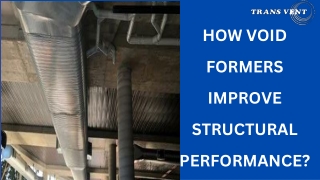
HOW VOID FORMERS IMPROVE STRUCTURAL PERFORMANCE?
Introduction In modern construction, engineers are always looking for ways to make buildings stronger, more efficient, and longer lasting. One innovation that has significantly impacted the field is the use of void formers in Sydney, which are special materials placed within concrete slabs to create intentional voids and reduce unnecessary weight. While this might seem counterintuitive, the careful use of void formers changes structural behaviour in ways that improve performance, lessen material use, and provide cost-effective solutions for projects of all sizes.
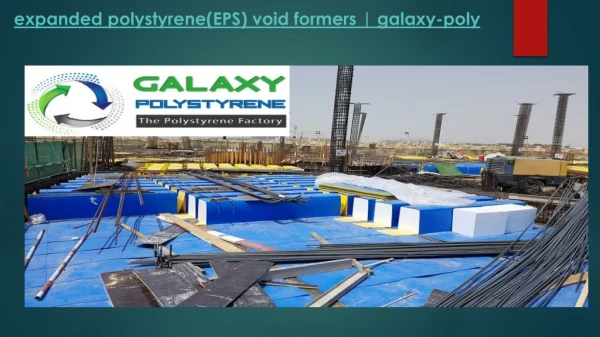
What Are Void Formers? Void formers are lightweight inserts made from materials like plastic, foam, or engineered composites. They are placed within concrete slabs or beams before pouring in the concrete. Once the concrete hardens, these void shapes stay in place, creating hollow sections within the concrete mass instead of a fully solid block. By creating voids in specific locations, designers can cut down on the overall volume of concrete needed while still keeping the necessary load-bearing strength. This makes void formers a useful option for large slabs, suspended floors, pavements, and other structural elements.
Reducing Weight Without Sacrificing Strength One main benefit of using void formers Sydney is the significant reduction in dead load or the weight of the structure itself. Heavy concrete can increase the forces acting on foundations, columns, and supporting walls, which requires larger structural elements and more reinforcement. By adding void spaces where concrete isn&’t needed structurally, lighter slabs can be made without compromising structural integrity. Lighter slabs provide several advantages: Smaller foundation needs Less reinforcement steel required Faster construction and improved labour efficiency
Enhanced Seismic Performance Building resilience during seismic events like earthquakes is an important design factor, especially in urban areas. Lighter structures generally perform better under seismic loads because lower mass leads to smaller inertial forces during ground movement. Void formers help reduce slab mass while keeping adequate stiffness and strength. This balance allows buildings to absorb and release seismic energy more effectively, improving safety and lowering the risk of structural damage during unusual loads.
Improved Concrete Quality and Reduced Cracking Concrete shrinkage and cracking can happen when large, solid masses of concrete harden unevenly or hold internal stresses. By using void formers, the overall concrete thickness is reduced in less critical areas, which helps control heat generation during curing and decreases internal shrinkage stresses. Cost Efficiency and Sustainability Using less concrete doesn&’t just save money — it also benefits the environment. Concrete production contributes significantly to construction carbon emissions, mainly due to cement production. Reducing concrete volume with void formers means fewer emissions and a smaller carbon footprint for the project. Additionally, using less material can often speed up installation. Suppliers can deliver void former Sydney systems ready for installation, and placing them on-site doesn&’t need specialised equipment.
Flexibility in Design Void former systems can be customised to fit various structural layouts. Whether a project involves flat slabs, cantilevered floors, or complex architectural designs, void formers can meet design specifications while still providing weight savings and structural reliability. Architects and engineers often turn to void formers to achieve longer spans between supports, allowing for more open, flexible floor plans without needing bulky structural elements.
Conclusion Understanding how void formers improve structural performance shows why they have become a valued tool in modern construction. Their versatility makes them suitable for many building types, from residential developments to commercial complexes. For expert advice and high-quality void former solutions tailored to your construction project, trust the team at Transvent. Their experience ensures innovative systems thatsupport structural performance, sustainability, and practical installation across Sydney and beyond. Disclaimer: This is generic Information & post; content about the services can be changed from time to time as per your requirements and contract. This is written for only SEO purposes; we are not claiming it is 100% accurate as it's general content. The images we use in this context have been taken from the official website of Transvent. Get the latest and updated information, contact us today or visit our website.
CONTACT US 38 Peachtree Rd, Penrith, 2750, NSW 02 4731 6100 Mon - Fri: 7:00am - 4:00pm, Sat - Sun: Closed